
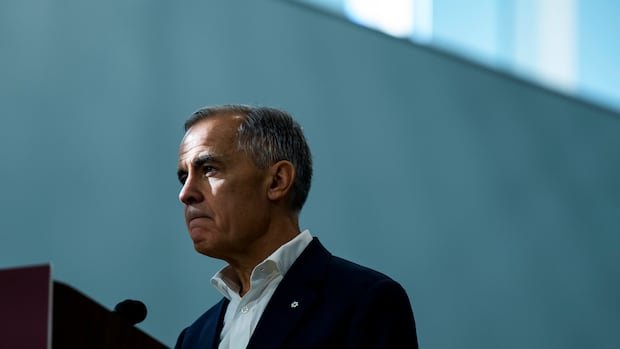
Prime Minister Mark Carney stated on Thursday that his government is not currently contemplating imposing additional retaliatory tariffs on American goods amid the ongoing trade dispute. He highlighted positive indications in bilateral discussions towards potential relief. The Prime Minister faces pressure from various premiers, including Ontario’s Doug Ford, and labor groups to confront U.S. President Donald Trump over escalating tariffs affecting crucial sectors, leading to job losses and investment shifts away from Canada.
Carney’s remarks followed Stellantis’ recent decision to relocate production of its Jeep Compass model from Brampton, Ontario, to Illinois, a move attributed to U.S. trade actions. Ford, scheduled to meet with Carney, urged a tough stance against the U.S. if a deal is not reached, emphasizing the need to retaliate.
Despite calls for a strong response, Carney emphasized the importance of ongoing negotiations between Canadian and U.S. officials. Trade Minister Dominic LeBlanc and Canada’s top bureaucrat, Michael Sabia, are engaged in discussions in Washington to reach an agreement, focusing on steel, aluminum, and energy sectors, including potential revival plans for the Keystone XL pipeline.
Carney previously lifted most of the retaliatory tariffs imposed by former Prime Minister Justin Trudeau in a bid to facilitate talks with the U.S. Notably, while certain Canadian goods remain exempt from tariffs, Carney has maintained levies on U.S. steel, aluminum, and specific auto imports to push for a favorable resolution.
Addressing the impact of Stellantis’ decision on the Brampton plant, Carney expressed disappointment and discussed potential developments dependent on the forthcoming Canada-U.S.-Mexico Agreement renegotiation. He mentioned opportunities for laid-off Brampton autoworkers to transition to the Windsor plant and stressed the government’s expectation for the company to provide retraining support.
Unifor, representing Stellantis autoworkers, expressed dissatisfaction with the offer to move employees to the Windsor plant, emphasizing the unfulfilled commitments from Stellantis. Opposition Leader Pierre Poilievre criticized Carney for the production shift, advocating for policy changes to support domestic auto manufacturing, including scrapping the GST on Canadian-made vehicles.
The evolving trade dynamics and their impact on the automotive industry continue to shape discussions and decisions, underscoring the complexities of the ongoing trade negotiations between Canada and the U.S.

