
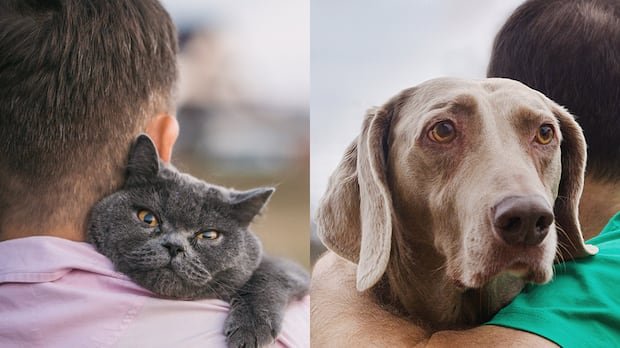
Chances are that either yourself or someone you know proudly considers themselves a “pet parent.” This comes as no surprise given that Canada boasts one of the highest rates of pet ownership globally, as reported by the Canadian Animal Health Institute (CAHI). In 2024, over 12 million Canadian households were home to at least one cat or dog, making cats and dogs the most popular choices with populations of 8.9 million and 8.3 million, respectively. Additionally, Canadians also house millions of birds, fish, and reptiles as pets.
Studies have demonstrated the positive impacts of pet ownership on human health and well-being. However, Jay Ingram, the author of “The Science of Pets,” suggests that these benefits do not entirely explain humans’ strong desire to connect with the natural world. When pondering the reasons behind keeping pets, Ingram references various theories, including the “biophilia” hypothesis proposed by evolutionary biologist Edward O. Wilson, who argued that humans’ innate attraction to other living beings is fundamental to our humanity and unites us with all other living species.
The quest to forge stronger bonds between humans and animals has driven scientific advancements in cloning animals and understanding their modes of communication. In an interview with guest host David Common on “The Sunday Magazine,” Jay Ingram delved into these endeavors. Noteworthy personalities like Paris Hilton and Tom Brady, who has invested in Colossal Biosciences, a biotechnology and genetic engineering company, have explored the realm of cloning pets. Although a relatively recent trend, pet cloning is more prevalent than commonly perceived. Expectations of perfect replication in cloned animals often fall short due to the genetic influences shaping individual characteristics post-birth, as observed in the case of Barbra Streisand’s cloned dogs.
Cloning, which originated in the 1960s in a less sophisticated form compared to its current state, is primarily driven by economic motives today. Instances such as the cloning of entire teams of polo horses underscore how cloning serves economic purposes, particularly in agriculture. Despite the emotional connections people share with their pets, the scientific understanding of animal consciousness, particularly in dogs and cats, remains limited. While advancements in AI offer potential insights into the minds of these animals, substantial progress is still required.
Research progress with wild animals appears promising due to the absence of pet owners’ biases. By studying patterns like sperm whales’ clicks without human emotional interference, scientists can uncover new insights. However, the anthropomorphic tendencies of pet owners can impede a deeper understanding of animal cognition. The complexity of animal thought processes, potentially vastly different from human cognition, poses a challenge to fully comprehending their mental worlds.
Overall, the evolving landscape of pet ownership, scientific exploration into cloning, and deciphering animal communication underscore the intricate and multifaceted relationship between humans and their animal companions.

