
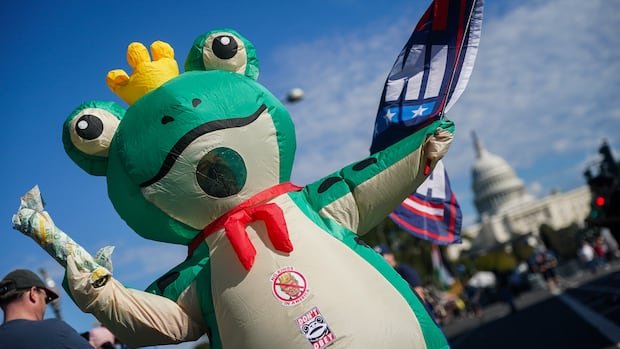
A recent trend in protest attire has emerged, featuring inflatable costumes at anti-ICE rallies across the United States. What began as a small group donning frog outfits outside an immigration detention center in Portland, Oregon, has now expanded to include a variety of whimsical creatures, both real and mythical.
These inflatable protests, aimed at demonstrating against ICE raids and the administration’s stance, have attracted participants of all ages, advocating for the protection of vulnerable members of society. Brooks Brown, a Portland activist and co-founder of Operation Inflation, explained how their organization acquires donations to purchase inflatable suits for protesters, emphasizing the visual impact these costumes have in shifting the narrative away from demonizing protesters towards highlighting the true sources of violence.
The use of inflatable costumes serves a dual purpose, according to Maral Karimi, a protest and social movements expert. Not only do they provide a disguise that encourages greater participation in demonstrations, but they also shield participants from potential legal repercussions and surveillance in an increasingly authoritarian climate.
These protests, characterized by solidarity and creativity, have faced criticism from the Trump administration and its allies, who have attempted to delegitimize the movement. Despite disparaging remarks, the protests have remained peaceful, with no reported arrests in several cities. In response to the inflatable costume trend, a White House spokesperson dismissed the protesters, prompting activists like Brooks Brown to reaffirm their commitment to the cause.
The use of inflatable costumes as a form of protest continues to draw attention and spark conversations, challenging conventional notions of dissent and resistance in the face of political turmoil.

