
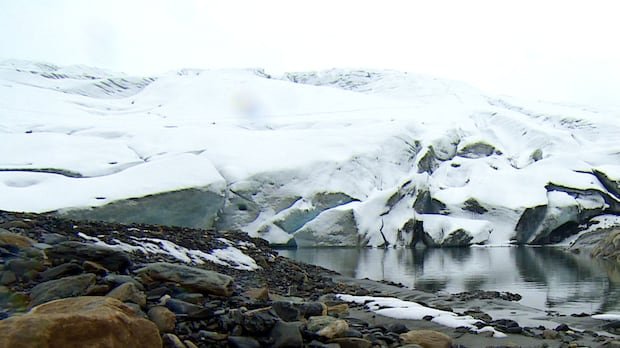
The year 2025 has been designated by the United Nations as “The International Year of Glaciers’ Preservation,” however, a climate researcher in northern British Columbia has revealed that last year marked the second highest level of glacier loss on record in western Canada.
Brian Menounos, a professor of earth sciences at the University of Northern British Columbia and the chief scientist at the Airborne Coastal Observatory of the Hakai Institute, emphasized the inevitability of glacier disappearance. He stated, “We have to understand that it’s not a question of if the glaciers are going to disappear, they are going to disappear,” adding, “What we’re finding is that these glaciers are disappearing much faster than previously projected.”
Menounos estimated that approximately 30 gigatonnes of glacial ice were lost in the region last year, equivalent to the size of B.C.’s Okanagan Lake.
Attributing the accelerated glacier loss to warmer temperatures, Menounos highlighted the role of rising greenhouse gas emissions from fossil fuel usage as a significant factor.

Menounos and an international team of researchers have been monitoring global glacial health using satellite, aircraft observations, and on-the-ice sampling techniques.
Last summer, their peer-reviewed study reported unprecedented ice loss in Western Canada, the Conterminous U.S., and Switzerland between 2021-2024.
A study published in the journal Nature last February warned about global glacier loss.
Menounos emphasized the significant impact of warmer conditions on glacier surfaces, altering their reflective properties and accelerating the melting process. The feedback loop created by larger and darker snow grains due to warmer conditions further exacerbates glacial melt, with winter snowfall being incapable of compensating for the lost ice mass.
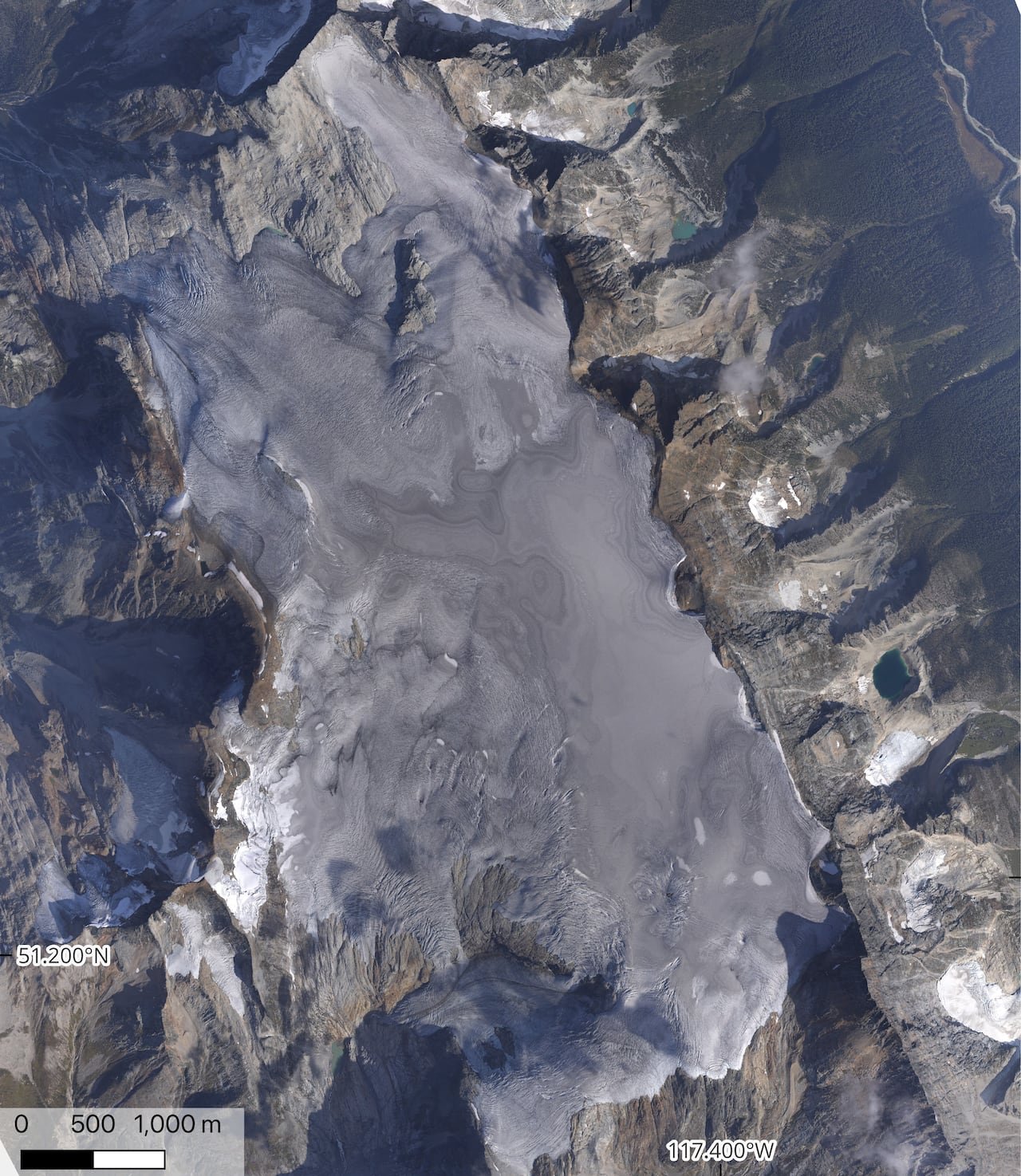
<figcaption class="image-caption

