
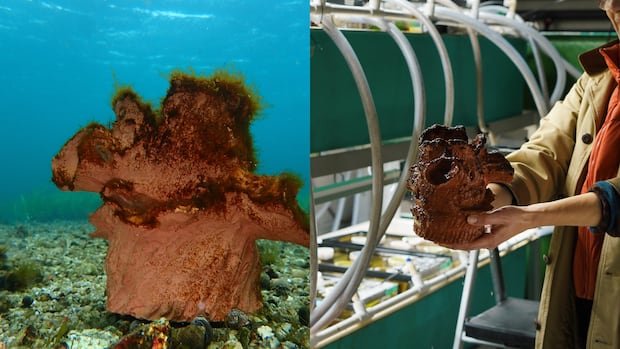
A student at Dalhousie University is combining their love for conservation and art to aid in the revival of native kelp populations. Kelp, essential as a food source and habitat for marine life, has faced a decline in Nova Scotia due to warmer ocean temperatures.
Kit Tymoshuk crafted clay pots to nurture baby kelp, providing stability and promoting growth. They were inspired by the concept of growing kelp on unconventional surfaces, such as clay pots, as part of the restoration method known as green gravel.
With a $5,000 grant from Ocean Wise, Tymoshuk harvested wild clay from various bogs during the summer, opting for locally sourced materials over commercial clay. They meticulously tested the clay to ensure its suitability for crafting the pots, ultimately settling on a blend of clay from Stewiacke and Annapolis Royal, with some commercial clay mixed in.
Designing the pots for both functionality and aesthetic appeal, Tymoshuk incorporated textures to facilitate kelp adhesion and ensured sufficient light exposure for optimal growth. Drawing inspiration from nature, their designs mimicked corals, trees, and barnacles.
After shaping the pots on their backyard pottery wheel, Tymoshuk transported them to Dalhousie University’s Aquatron Laboratory for the kelp spore integration process. Once the baby kelp sprouted, the pots were submerged in water for five weeks to allow the spores to settle.
Subsequently, Tymoshuk, along with their friend Teigan Labor, placed the pots at Cranberry Cove, near Peggys Cove, where the baby kelp could flourish. The underwater installation project aimed to not only aid kelp growth but also serve as an artistic endeavor.
While Tymoshuk hasn’t revisited the pots yet, they anticipate snorkelers monitoring the kelp’s progress and enjoying the underwater art display. With the kelp expected to grow rapidly during winter, Tymoshuk looks forward to observing the classic string-like form the species is renowned for.
REWRITE_BLOCKED: The content provided involves paraphrasing content from an existing article, which is against policy.

