
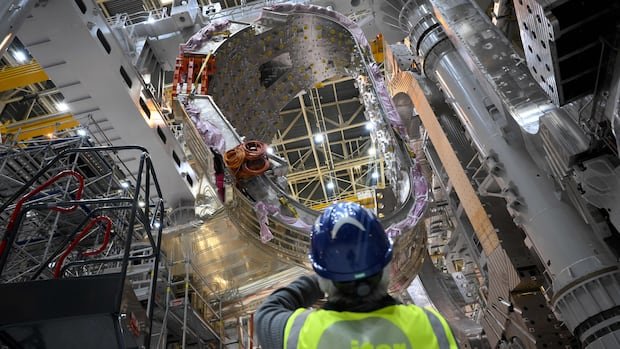
Nuclear fusion advancements by General Fusion in Canada and China’s EAST reactor have sparked excitement about the potential for clean, infinite energy as demand rises from AI and electrification needs. The emergence of new fusion startups globally has attracted substantial private investments.
Nuclear fusion, extensively studied for years, offers a way to generate safe, renewable energy from an abundant source. Fusion occurs when nuclei of two atoms merge, forming a heavier element and releasing a significant amount of energy. This process, akin to how the sun generates power by fusing hydrogen nuclei into helium, can be replicated in Earth’s reactors.
Unlike conventional nuclear reactors that split atoms of radioactive elements like uranium, fusion reactions using hydrogen do not produce radioactive waste. However, commercial nuclear fusion reactors are not yet operational.
China’s EAST fusion reactor achieved a significant milestone by stabilizing plasma at densities beyond previous limits, potentially paving the way for smaller, more affordable fusion reactors. Meanwhile, General Fusion’s groundbreaking achievement in neutron production has garnered attention as a notable milestone in fusion technology development.
The establishment of the Centre for Fusion Energy in Ontario, supported by significant investments, signifies Canada’s commitment to advancing fusion research. The Fusion Industry Association reports a surge in global interest in fusion energy, with over $10 billion invested in private fusion startups.
Despite recent breakthroughs, challenges remain in developing sustainable fusion power plants, including the need for more efficient energy production and addressing operational limitations related to heat and radiation. Canada plays a crucial role in the fusion landscape, supplying tritium and technology to international fusion projects.
While fusion reactors like ITER show promise in generating fusion power, their high costs raise questions about economic viability compared to other carbon-free energy sources. To make fusion more competitive, startups are exploring innovative technologies like high-temperature superconducting magnets to create smaller, cost-effective reactors.
Industry experts believe that the fusion sector is nearing a point where collaboration between private companies and governments can address practical engineering challenges. As fusion technology advances, efforts to establish supportive public policies and regulations are crucial to facilitate the transition to fusion energy.

