
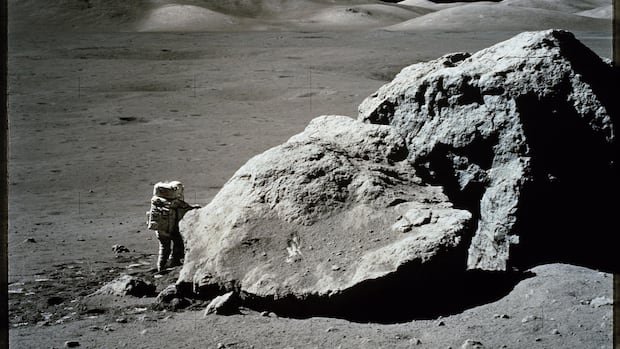
On July 20, 1969, the global audience witnessed a historic moment as American astronauts Neil Armstrong, Buzz Aldrin, and Michael Collins embarked on a groundbreaking mission to the moon. This event marked the dawn of a new era in space exploration, with humans venturing beyond the confines of Earth.
Following several successful missions, including the memorable Apollo 13 incident that thwarted a lunar landing, the era of moon exploration concluded after Apollo 17 in December 1972. Various factors such as the Vietnam War expenses, achieving the goal of surpassing the Soviet Union in reaching the moon, and declining public interest contributed to the cessation of moon missions for over five decades.
However, the landscape is evolving with NASA’s ambitious Artemis program, aimed at returning humans to the moon’s surface in the coming years. The program’s objective extends beyond mere exploration, focusing on scientific advancements and engineering developments that push the boundaries of human capabilities.
The upcoming Artemis II mission, scheduled for early February, will orbit the moon with astronauts from NASA and the Canadian Space Agency. While not landing on the moon, the crew will conduct essential tests and experiments, paving the way for the subsequent Artemis III mission in 2028, which will see astronauts journey to the moon’s uncharted south pole.
In parallel, international players like China and India are also intensifying their lunar aspirations, aiming to land humans on the moon by 2030 and 2040, respectively. The moon has emerged as a coveted destination, attracting interest from governments, private enterprises, and commercial entities envisioning sustained human presence on its surface.
The quest for the moon is not solely a pursuit of scientific knowledge but also an investment in technological innovation and economic growth. Space missions yield unforeseen benefits, spurring advancements in fields like healthcare, computing, and resource utilization. Technologies developed for space exploration have found applications in everyday life, from medical devices to consumer electronics.
Moreover, the emerging space economy underscores the shift towards commercial space activities, with governments collaborating with private entities to capitalize on lunar resources and foster economic opportunities. Initiatives like lunar mining and resource extraction hold promise for creating jobs and driving economic prosperity in the burgeoning space industry.
As humanity embarks on its lunar journey once again, the future of moon exploration remains uncertain. Yet, the optimism and transformative potential of space exploration underscore its significance in shaping humanity’s future and driving innovation on an unprecedented scale.

