
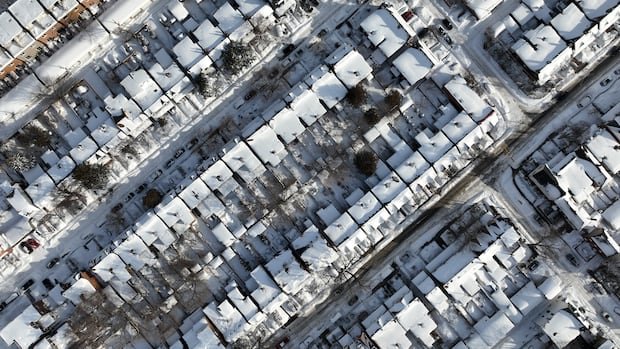
The Canadian Real Estate Association (CREA) attributes the decline in housing sales in January to the harsh winter conditions. According to the latest data, national housing sales decreased by 5.8% month-over-month.
Shaun Cathcart, CREA’s senior economist, mentioned that the slow January was especially noticeable in parts of Ontario, where severe winter weather affected transactions. He explained that the central and southwestern regions of Ontario were hit hard by a storm in the third week of January, impacting housing activity.
The weather conditions were a significant factor in discouraging potential buyers from attending house showings, as confirmed by Hamilton-area real estate agent Joe Ferrante. While the frigid weather played a role in the reduced activity, Ferrante noted that the market slowdown from late 2025 continued into January.
Despite the lackluster month, CREA remains optimistic about its 2026 forecast. Cathcart stated that unless there is another major snowstorm in densely populated areas of Canada, they anticipate an improvement in the housing market.
At the end of January, Canada had approximately 4.9 months of housing inventory available for sale, aligning with the long-term average of five months. This metric is used by CREA to gauge market balance, with a lower ratio indicating a sellers’ market and a higher ratio pointing to a buyers’ market.
Cathcart mentioned that some buyers may be waiting for lower interest rates, but there is no indication of an imminent change. The Bank of Canada had reduced its key interest rate to 2.25% at the end of October and has maintained it since then.
Looking ahead, CREA predicts a slight housing market rebound in 2026 after a sluggish 2025. Affordability remains a challenge for first-time buyers due to high prices and mortgage rates. The national average price of a home in January was $652,941, a 2.6% decrease from the previous year, according to CREA’s national composite MLS home price index.
CREA’s forecast for 2026 anticipates a modest 2.8% increase in home prices. Regionally, prices have declined in British Columbia, Alberta, and Ontario, offsetting gains in other provinces.

