
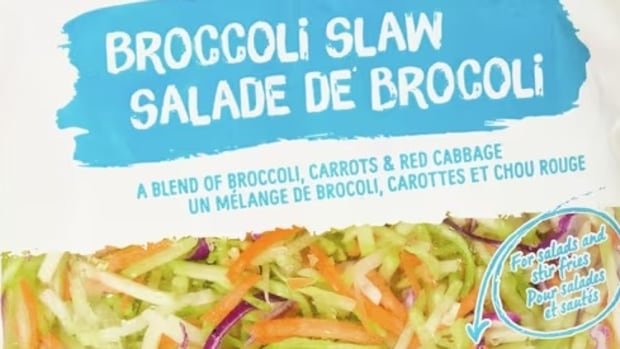
The Canadian Food Inspection Agency (CFIA) recently disclosed additional information to CBC News concerning a $10,000 penalty imposed on a Loblaw-owned Superstore for falsely marketing imported food as Canadian. The mislabeled product in question was President’s Choice broccoli slaw, a variation of coleslaw crafted from shredded broccoli under the Loblaw-owned brand. The CFIA revealed that a Toronto Superstore promoted these salad bags using “maple leaf advertising decals” and a “Product of Canada” declaration on an in-store shelf tag, despite the packaging clearly stating “Product of USA.”
To qualify for a “Product of Canada” label, a food item must be wholly or predominantly produced in Canada, as per CFIA guidelines. Grocery retailers have taken advantage of a growing buy-Canadian trend that emerged in response to trade tensions and remarks by former U.S. President Donald Trump, utilizing Canadian branding to endorse imported goods as domestic products.
Despite public outcry and investigations by both CFIA and CBC News, major grocers have been found guilty of misleading consumers by presenting imported food as domestically sourced, a practice now termed “maple washing.” Following CBC’s probe last year, shoppers expressed disappointment over the lack of fines issued by CFIA to retailers violating labeling regulations.
In a separate incident involving Sobeys-owned Safeway, the CFIA investigated a case where Compliments avocado oil was falsely advertised as “Made in Canada” despite being imported. While Sobeys rectified the error, CFIA is considering further penalties, hinting at potential fines for the grocer.
Sheila Young, a consumer who reported the mislabeled avocado oil, expressed frustration over the prolonged decision-making process. The delay in issuing fines has raised concerns among consumers questioning the efficiency of CFIA’s enforcement actions.
Debates around the adequacy of the $10,000 fine imposed on Loblaw have surfaced, with some shoppers deeming it insufficient given the company’s substantial revenues. Calls for stricter penalties, starting at $100,000, have been made to deter retailers from misleading consumers with false country-of-origin claims.
However, current regulations limit CFIA’s fines to a maximum of $15,000 per violation, necessitating regulatory changes for more substantial penalties. Both Loblaw and Sobeys maintain their commitment to accurate country-of-origin labeling but acknowledge the complexities involved in managing extensive product inventories.

