
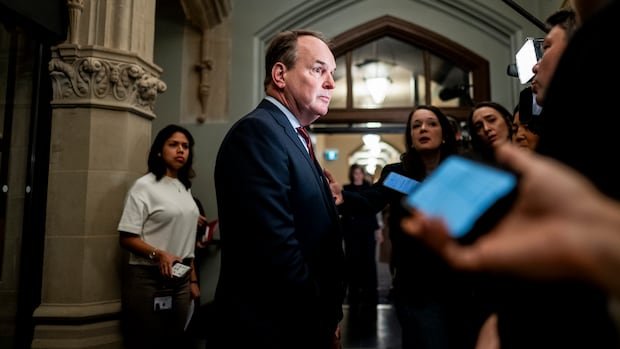
Liberal House leader Steve MacKinnon expressed concerns on Tuesday about the opposition’s potential lack of support for the government’s upcoming budget, while also dismissing certain demands put forth by other parties. The government, needing the cooperation of at least one opposition party to pass the budget, faces the risk of triggering an election if it fails to secure enough votes.
MacKinnon shared his apprehensions with reporters at Parliament Hill, emphasizing his worry when opposition parties seem to be ruling out the possibility of backing the budget. Both the Conservative Party and the Bloc Québécois have outlined their priorities for the budget. Conservative Leader Pierre Poilievre requested an “affordable budget” with broad tax cuts and a deficit under $42 billion. The Bloc Québécois listed six key priorities, including increased federal health transfers, new infrastructure investments, and enhancements to various social programs.
Despite the concerns raised by MacKinnon, he dismissed the demands of both the Conservative Party and the Bloc Québécois, labeling them as unrealistic. In response, NDP interim Leader Don Davies asserted that it is the government’s responsibility to garner support for its budget. Davies emphasized that Prime Minister Carney must craft a budget capable of winning backing from at least one opposition party to avert the possibility of an election.
The NDP, with a reduced caucus of seven seats, retains the ability to influence the budget’s fate. Davies met with Carney to present the NDP’s budget priorities, focusing on significant investments in job creation, healthcare, and housing. Carney acknowledged that this year’s deficit is expected to surpass the previous year’s, but the Liberals have committed to balancing operational spending within three years.
A recent report by the Parliamentary Budget Officer projected an annual deficit of $68.5 billion for the government, reflecting an increase from the previous year. However, the forecast does not encompass plans to elevate defense spending to meet NATO targets by 2035 or the government’s proposed reductions in public service expenditures over the next three years.

