
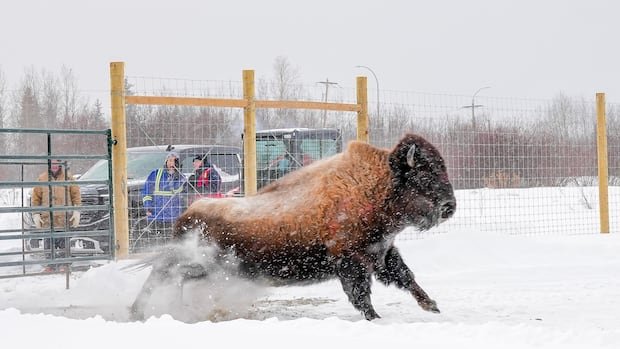
A symphony of hoofbeats echoing against metal and snow cut through a severe blizzard at a ranch in northeastern Alberta operated by the Métis community. Twenty shaggy wood bison dashed out of a metal shipping container one after the other and into a fenced area of the boreal forest. As the herd disappeared into the swirling snow, there were embraces, cheers, and high-fives. This marked the first bison stampede, albeit controlled, at the Willow Lake Métis Nation in approximately 120 years.
Around 30 elders and leaders from the community welcomed the herd, which had been relocated from Elk Island National Park. The bison now reside on a ranch managed by the Métis community near Anzac, about 50 kilometers southeast of Fort McMurray.
“It’s so heartwarming and gratifying… so incredibly lovely to witness. I’m grateful to be a part of this,” expressed Robert Cree, an elder from the nearby Fort McMurray 468 First Nation. “I’m pleased they are back home. There were buffalo here long ago. My grandfather used to talk about it. I’m delighted they’ve returned to our traditional lands.”
Métis leaders view the opening of the ranch as a historic milestone for the Indigenous community and the bison themselves. Kyle Whitford, an Indigenous guardian employed by Willow Lake Métis Nation, described the herd as a triumph for food sustainability.
“Bringing the wood bison back to Wood Buffalo is a significant achievement,” Whitford stated. “I’m extremely thrilled and relieved that they are now in their home, which they will cherish and enjoy because we constructed it with care.”
The bison are part of Willow Lake’s $50 million multi-year food sustainability initiative. They will occupy 16 hectares of the 82-hectare ranch, which will eventually feature hens, honey bees, greenhouses, hydroponics, and community gardens.
“It’s a crucial step for our agricultural and tourism endeavors, as well as contributing to achieving sovereignty, which involves the ability to impact your surroundings,” noted Matthew Michetti, who oversees government and industry relations for Willow Lake.
Future plans include cultural and tourism initiatives such as an Indigenous medicine walk, collaborations with schools, and the establishment of a visitors’ center.
Stella Lavallee, president of Willow Lake Métis Nation, looks forward to elders sharing their knowledge during the bison harvest, providing immediate food for Métis families while passing down valuable skills to younger generations.
Feather Bourque-Jenner, director at Willow Lake, emphasized that the project will help reduce food and living expenses in the northern region.
“As part of that, we are reintroducing our lifestyle in a more sustainable manner back into our daily lives,” she explained.
Nathaniel Ostashewski, owner of Cyrus Bison in Bonnyville, Alberta, located over 400 kilometers south, is advising Willow Lake on ranching practices. He foresees the herd expanding.
The lush environment near Gregoire Lake, accompanied by extended northern summer daylight, promotes plant growth, according to Ostashewski. The bison will enhance the muskeg by aerating the soil with their sharp hooves, reintroducing moisture and nutrients. Even the hairs from their coats will serve as nesting material for birds and rodents.
“If the bison thrive in Alberta, it benefits all of us,” Ostashewski concluded.

