
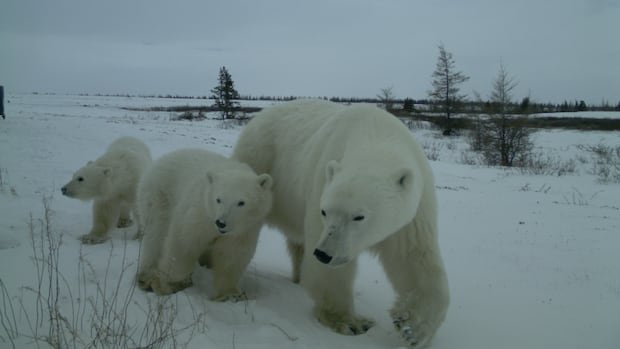
In Canada’s northern regions, a rise in polar bear sightings near communities has been noted over the years. Researchers previously believed that these bears were being driven ashore due to diminishing sea ice caused by climate change, with some speculating that hunger might be leading them to seek out human encounters for food. However, a recent 11-year study by experts from the University of Saskatchewan and University of Manitoba has challenged this assumption.
The study, led by Douglas Clark from the U of S School of Environment and Sustainability, revealed surprising findings. Contrary to expectations, it was observed that bears of various body conditions, ages, and genders were more likely to approach human-populated areas the longer they stayed off the ice, regardless of their physical state.
Clark’s initial monitoring efforts, initiated 15 years ago, involved deploying trail cameras in Wapusk National Park near Churchill, Manitoba, to track polar bear movements. The research aimed to understand why these bears were increasingly interacting with humans. The study, recently published in Arctic Science, indicated that the bears’ encounters with people were primarily due to their prolonged presence onshore caused by shrinking sea ice, rather than a deliberate search for food among humans.
While some bears exhibited signs of hunger, the research did not find evidence of them actively hunting humans. The data collected over a decade, comprising more than 500 polar bear visits, underscored the impact of climate change on their habitat, pushing them closer to human settlements due to the loss of their icy hunting grounds.
Alex Crawford, an assistant professor at the University of Manitoba, emphasized that despite the bears’ changing behavior, they have not become more aggressive towards humans due to food scarcity. The ongoing research project aims to monitor polar bear behavior in the face of habitat and food supply alterations over time, to better understand and mitigate potential risks associated with these iconic Arctic creatures.

