
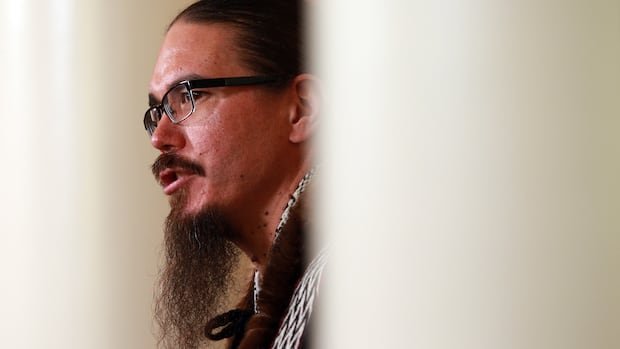
A group of Indigenous leaders from British Columbia has traveled to Calgary to directly advise pipeline executives against investing in a new bitumen pipeline to the northwest coast, warning of potential legal challenges. Haida Nation President Jason Alsop, known as Gaagwiis, emphasized the importance of protecting the ocean and food security, stating that introducing crude tankers to northern B.C. waters poses significant legal and financial risks.
Reflecting on past victories against Enbridge Inc.’s Northern Gateway proposal, Chief councillor Arnold Clifton of the Gitga’at First Nation highlighted the strengthened unity within northern B.C. communities to oppose similar projects. The delegation engaged in discussions with senior officials from Pembina Pipeline Corp. and Trans Mountain Corp., conveying their concerns about potential environmental impacts and legal disputes that a new oil pipeline could bring.
Pembina Pipeline’s focus remains on natural gas transportation in western Canada and its partnership with the Haisla Nation on the Cedar LNG project in Kitimat. On the other hand, Trans Mountain, a government-owned entity, operates an existing pipeline connecting Alberta’s crude oil to Vancouver and is advising the Alberta government on potential new pipeline developments.
While Trans Mountain acknowledged meeting with the Indigenous leaders and fostering a respectful dialogue, Pembina Pipeline did not provide comments on the discussions. The First Nations delegation, led by Alsop, extended invitations to other oil and gas pipeline companies, emphasizing the risks associated with supporting a B.C. oil pipeline project.
The Alberta government is gearing up to propose a new B.C. pipeline to the federal major projects office, seeking private-sector involvement. The project aligns with a broader energy accord between the Alberta and federal governments, aiming to facilitate the construction of a B.C. pipeline alongside a significant carbon capture and storage initiative in Alberta.
Amid considerations over the pipeline’s endpoint, Prince Rupert has been favored due to its deepwater port and proximity to Asia. However, discussions also explore a southern route to Vancouver, potentially encountering fewer environmental challenges and opposition. Hereditary Chief Darin Swanson of the Haida Nation emphasized the irreplaceable value of their pristine beaches and marine resources, asserting that no financial incentive could justify risking their ecological integrity.

