
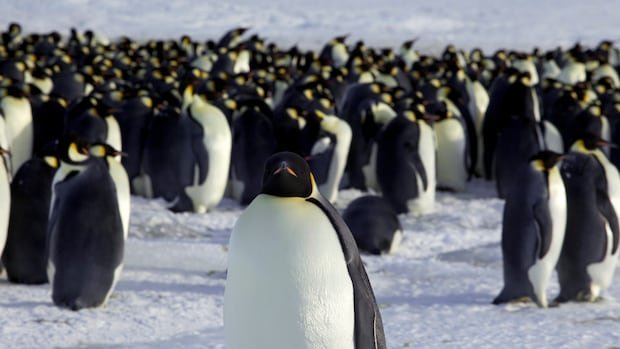
Emperor penguins, the largest species of penguins, have been classified as endangered in a recent global evaluation focusing on the impact of climate change on their living environment and numbers. This reclassification signifies more than just a shift in the status of a single species; it serves as a troubling indicator of the detrimental effects of human-induced climate change on Antarctica’s ecosystems, where sea ice levels have reached record lows.
These penguins heavily depend on sea ice during the breeding and moulting seasons when they raise their chicks and shed old feathers, making it unsafe for them to swim in the ocean. However, due to global warming, this crucial sea ice is breaking up earlier than usual. The International Union for Conservation of Nature, which oversees the Red List of endangered species worldwide, highlighted this worrisome trend in its assessment.
According to Philip Trathan, a member of the IUCN specialist group involved in the emperor penguin’s Red List evaluation, these penguins serve as a vital indicator species revealing the impact of greenhouse gas emissions and climate change on our planet. Satellite data reveals a consistent decline in the spring population of emperor penguins over the past decade, with an estimated 10% decrease from 2009 to 2018, despite a substantial population of about 256,500 breeding pairs across 54 colonies in 2020.
The exact number of chicks and non-breeding penguins remains uncertain due to the challenging nature of monitoring the remote Antarctic region. The assessment warns that if global warming continues at its current rate, emperor penguin populations could plummet by 30 to 59% in the next three generations.
Additionally, the emperor penguin now shares its endangered status with the Antarctic fur seal, whose population has dwindled by more than half between 1999 and 2025. Climate change has pushed the seal’s primary food source, krill, into deeper waters due to rising temperatures, resulting in krill shortages that impact the survival of seal pups and the overall aging of the population.
Previously categorized as “Near Threatened,” the emperor penguin’s new “Endangered” designation indicates a significantly high risk of extinction in the wild. Recommendations from the assessment include enhanced monitoring of the penguins’ sea-ice habitat through satellite surveys to better grasp the dynamics of their changing populations.

