
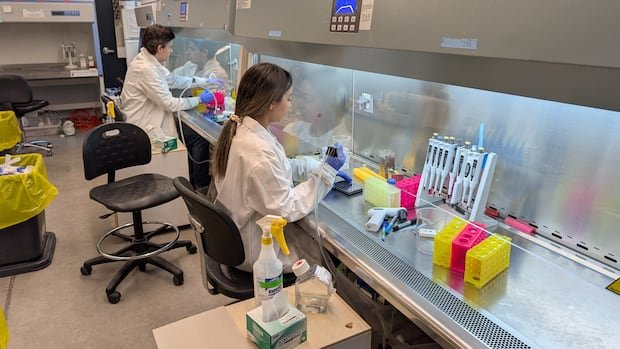
A pivotal moment in Charu Chandrasekera’s career occurred when she realized the limitations of using animal testing for her research on heart failure, prompted by her father’s need for a quadruple bypass surgery. This realization led her to found the Canadian Centre for Alternatives to Animal Methods at the University of Windsor in 2017, focusing on innovative technologies like 3D bioprinted tissues using human cells as alternatives to traditional animal testing methods.
Despite the groundbreaking work of the center, it faced closure in 2024 due to insufficient funding, highlighting a lack of government support in Canada compared to other countries like the U.K., the United States, and the European Union, which have dedicated funding and strategies to phase out animal testing in research settings. While Canada has strategies for reducing animals used in chemical testing, there is no comprehensive plan for biomedical testing, which accounts for a significant portion of the up to five million animals used annually in Canadian research.
Charu Chandrasekera emphasized the need for Canada to embrace the shift away from animal testing, citing the potential growth of the industry to $30 billion by 2030 and urging the country to secure its place in this emerging field. Researchers like Milica Radisic from the University of Toronto have developed advanced technologies, such as organ-on-a-chip models, to mimic human tissues and organs for more accurate testing, surpassing the limitations of animal models.
Regulatory bodies like the Canadian Council on Animal Care (CCAC) play a crucial role in assessing and approving alternative methods in research. While progress has been made in banning cosmetic testing on animals and developing strategies for toxicology, there is still a need for a comprehensive plan to replace animals in biomedical research. Health Canada continues to evaluate new technologies to potentially replace animal testing in certain conditions.
Despite advancements in alternative methods, some researchers express skepticism about fully ending animal testing due to the unique insights animal models offer. However, proponents of alternative methods emphasize the importance of scientific progress guided by evidence rather than personal opinions. Funding remains a critical factor in accelerating the transition towards non-animal testing methods, with countries like the U.S. and the U.K. making substantial investments in this direction, while Canada lags behind in financial support for these initiatives.
The debate on the future of animal testing continues, with calls for Canada to take a leadership role in adopting alternative methods and investing in innovative technologies to pave the way for a more ethical and effective approach to biomedical research.

