
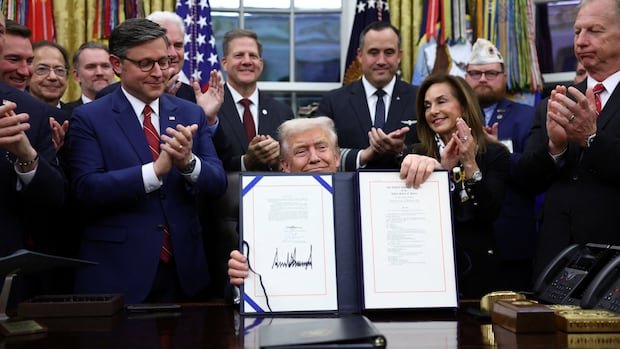
The U.S. House of Representatives approved a bill on Wednesday to bring an end to the country’s lengthiest government shutdown, which was later signed by President Donald Trump. This move concluded a historic 43-day period during which federal employees went without several paychecks, travelers found themselves stranded at airports, and individuals queued at food banks to feed their families.
Following their return to Washington, D.C., after an eight-week absence, House lawmakers used their slight majority to pass the bill with a 222-209 vote. The Senate had previously passed the same measure.
President Trump’s signature officially marked the conclusion of the second government shutdown under his administration, underscoring deep-seated partisan divisions in Washington, where his administration took unconventional actions to pressure Democrats into compromising on their demands.
Democrats aimed to extend a tax credit that reduces healthcare coverage costs through Affordable Care Act marketplaces, a point of contention that led to the funding lapse. On the other hand, Republicans insisted that this issue should be addressed separately.
The shutdown highlighted the stark ideological differences within Congress, with Republicans accusing Democrats of leveraging the shutdown’s hardships to advance their agenda. Democrats, however, criticized Republicans for prioritizing tax breaks over crucial healthcare subsidies.
Despite the bill’s passage, Democratic leaders emphasized that the fight for subsidy extensions was far from over. The agreed-upon compromise funds three annual spending bills and extends government funding until January 30. Additionally, the legislation safeguards federal workers from further layoffs and ensures they receive their due pay post-shutdown.
The bipartisan effort saw eight senators breaking ranks with Democrats to support the bill, acknowledging the need to address healthcare concerns raised during the shutdown. Plans for a mid-December vote to extend healthcare subsidies offer a glimmer of hope for ongoing discussions on this critical issue.

