
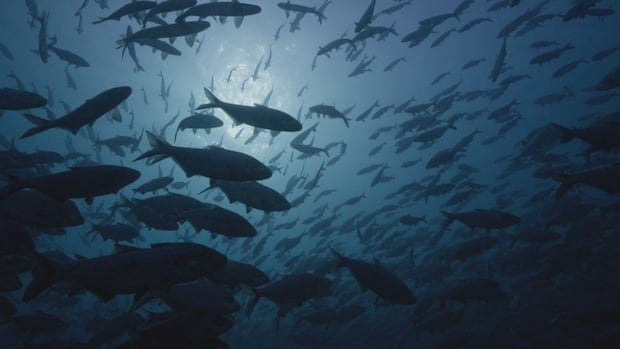
In Lake Huron, near the Bruce Nuclear Generating Station in Tiverton, Ontario, an intriguing gathering of fish is taking place in the warm waters discharged from the power plant. This unique phenomenon is attracting attention as documentary filmmakers Yvonne Drebert and Zack Melnick utilize a state-of-the-art $250,000 underwater drone to capture stunning footage beneath the surface of the Great Lakes. Their documentary, “Hidden Below: the Great Lakes,” showcases rare wildlife in this vast freshwater ecosystem.
The drone footage reveals a mesmerizing underwater world, with millions of gizzard shad shimmering in the sunlight alongside various other fish species such as bigmouth buffalo, walleye, bowfin, salmon, trout, catfish, and carp. The filmmakers describe this underwater gathering as “fish city,” emphasizing the dense population of fish in this warm water refuge.
Experts point out that the warmer water from the power plant’s thermal plume provides an abundance of food for the fish, leading to increased nutrient cycling and algae growth. However, this concentration of fish may indicate a significant shift in the ecosystem, attributed in part to the impact of invasive species like zebra and quagga mussels.
Nicholas Mandrak, a leading freshwater fish scientist from the University of Toronto, explains that the thermal plumes from power plants and other sources create unique habitats for fish but also reflect ecological changes. The proliferation of mussels has altered the food availability in the Great Lakes, influencing fish behavior and distribution.
As the warm water discharge affects the surrounding environment, concerns are raised about the potential consequences for native fish populations and the ecosystem as a whole. Scientists emphasize the importance of monitoring these changes and understanding the impact of industrial activities on the delicate balance of the Great Lakes ecosystem.
The presence of the “fish city” near the Bruce Nuclear Generating Station serves as a reminder of the interconnectedness of human activities and natural environments, prompting further exploration and research into the consequences of warm water discharge on aquatic life in the Great Lakes region.

