
The U.S. military reported that its 20th operation targeting a boat suspected of smuggling drugs resulted in the deaths of four individuals in the Caribbean Sea. This incident, which occurred on Monday, was disclosed in a social media post by U.S. Southern Command. The total casualties from these operations, which began in September, now stand at 80, with the Mexican Navy halting its search for a survivor after a strike in late October.
The post by Southern Command displayed a video showing a boat speeding across the water before being engulfed in flames. According to the command, intelligence indicated that the vessel was engaged in narcotics smuggling along a well-known trafficking route.
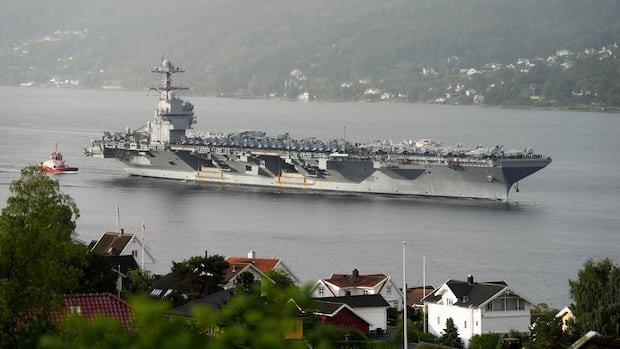
There has been a shift in communication strategy, with Southern Command making the announcement instead of U.S. Defense Secretary Pete Hegseth, although he promptly shared the statement. In a move to enhance its presence in the region, the Trump administration is deploying the USS Gerald R. Ford aircraft carrier, the most advanced warship in the nation, which is expected to arrive shortly after voyaging from the Mediterranean Sea.
Hegseth officially named the ongoing mission as Operation Southern Spear on Thursday, underlining the growing importance and continuity of the military’s involvement in the area. Once the USS Gerald R. Ford reaches its destination, the mission will involve nearly twelve U.S. navy vessels and around 12,000 sailors and marines.
The administration maintains that the reinforcement of warships aims to thwart drug trafficking into the U.S., although it has not presented any evidence to validate its claim that the individuals aboard the targeted boats were “narcoterrorists.” These operations have predominantly targeted vessels in the Caribbean Sea but have also taken place in the eastern Pacific Ocean, a key route for cocaine smuggling from major producers.
Some analysts view the deployment of the aircraft carrier as a significant tool of intimidation against Venezuelan President Nicolás Maduro, who is facing allegations of narcoterrorism in the U.S. There are differing opinions on whether U.S. warplanes might conduct airstrikes on land targets to pressure Maduro to resign.
U.S. Secretary of State Marco Rubio has declared the U.S. does not recognize Maduro as the legitimate leader of Venezuela due to accusations of election fraud. He characterized the Venezuelan government as a facilitator of drug trafficking towards the U.S.
Maduro has dismissed the U.S. government’s claims as a fabrication of a war against him. Venezuela’s government has mobilized troops and civilians to defend against potential U.S. attacks. President Trump justifies the operations by asserting that the U.S. is in conflict with drug cartels and alleges that the boats are linked to foreign terror groups flooding American cities with drugs.
Lawmakers, including Republicans, have demanded more clarity on the targets and legal justifications for these actions. Rubio and Hegseth briefed a bipartisan group of legislators overseeing national security matters, offering insights into the legal rationale and strategy behind the strikes.
In response, Senate Republicans rejected a proposal aimed at limiting Trump’s authority to launch an assault on Venezuela without congressional approval.

