
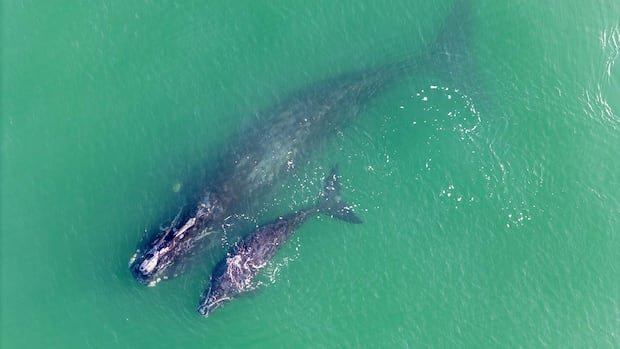
North Atlantic right whale experts on both sides of the border express cautious optimism following an increase in the number of newborn calves this year. A total of 23 calves were welcomed during the calving season from November to April off the southeastern U.S., marking the highest count since 2009.
Amy Warren, a scientific program officer at the New England Aquarium’s Anderson Cabot Center for Ocean Life, described the birth of 23 calves this year as a hopeful sign. However, she emphasized the importance of these calves surviving into adulthood to make a meaningful contribution to the critically endangered North Atlantic right whale population, which currently stands at a mere 380 individuals.
Historically, around 20 new calves were born annually two to three decades ago. In recent years, the calving numbers have dwindled, with an average of 10 to 15 calves per year. In 2018, no known calves were born, highlighting the decline. While the reason behind the recent increase in births remains uncertain, the health of the mothers plays a significant role, particularly in terms of their food intake and overall well-being.
North Atlantic right whales primarily feed on a specific type of plankton, but shifting food sources due to climate change have posed challenges, forcing them to travel longer distances without proper nourishment. Environmental factors, such as ocean noise, vessel traffic, and entanglement in fishing gear, further impact the whales’ health.
Conservation efforts, including fishery closures and speed restrictions for marine vessels, have been implemented in both Canadian and U.S. waters to safeguard these marine mammals. Researchers note that the smaller gap between calves this year and the improved health conditions of some mothers are positive indicators for population growth.
While the baby boom of 23 new calves is welcome news, experts stress that the overall population remains critically low. To reverse the decline in North Atlantic right whale numbers, sustained efforts are needed, with an estimated 50 calves per year required for several years. The whales have been observed moving into Canadian waters, with hopes of further sightings to monitor the population’s progress.

