
A significant military strike by the U.S. on a suspected drug smuggling vessel near Venezuela’s coast marked the beginning of a broader military operation, officials revealed. U.S. Defence Secretary Pete Hegseth confirmed that military actions would persist, indicating a prolonged military endeavor in Latin America. President Donald Trump released a video showcasing the aerial attack that destroyed the vessel, which he claimed was transporting large drug quantities and 11 alleged “terrorists,” all of whom perished.
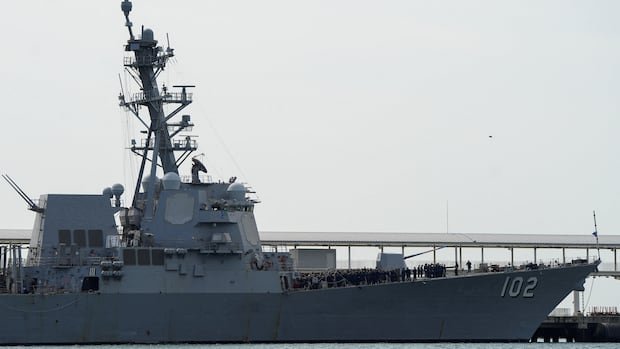
The operation comes after a recent military build-up, involving the repositioning of warships closer to Venezuela and the deployment of thousands of troops. The military’s objective is to intercept drug shipments by cartels bound for the U.S. Trump suggested that the video was a deterrent, stating that such actions would not be repeated after witnessing the strike.
Although Trump did not present evidence, he asserted that the 11 individuals killed belonged to the Tren de Aragua gang. Tren de Aragua originated as a prison gang in Venezuela’s Aragua state, known for its brutality, including beheadings and live burials. The group has expanded its operations to various countries, engaging in illegal activities such as kidnapping, extortion, sex trafficking, and drug trafficking.
The U.S. administration designated Tren de Aragua as a transnational criminal organization, with Trump subsequently labeling it a “foreign terrorist organization” during his presidency. Trump accused the group of facilitating violent migrant flows into the U.S. and terrorizing urban populations. Despite denying any ties to Tren de Aragua, Venezuelan President Nicolás Maduro has been accused by the U.S. of collaborating with cartels to flood the U.S. with cocaine laced with fentanyl.
Regarding potential military intervention in Venezuela, the U.S. has intensified its military presence near the Venezuelan coast, positioning navy destroyers, a cruiser, and forthcoming amphibious assault ships in the region. While an invasion is not imminent, the extent of the ongoing operation remains undisclosed.
Maduro, addressing the Venezuelan populace, urged readiness for a potential invasion, denouncing the deployment as a criminal threat. He mobilized troops along the coast and border with Colombia, urging civilians to join a militia. Venezuelan Foreign Minister Yvan Gil condemned the deployment as an unjustified threat to Venezuelan sovereignty.
Maduro’s claim of winning the previous year’s presidential election remains highly contested, with Canada and the U.S. disputing the legitimacy of his leadership. Venezuela’s political opposition seeks international support to remove Maduro from power, endorsing the U.S. military deployment as a necessary measure against what they deem a criminal regime.

