
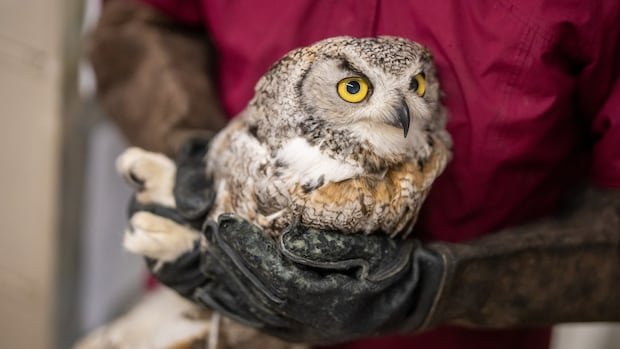
A resilient, self-sufficient single mother, Casper the great horned owl has nurtured over 500 owlets in her 26-year tenure at the Orphaned Wildlife Rehabilitation Society in Delta. Casper’s unwavering dedication to her young ones is evident, as she currently tends to four fledglings, rescued under different circumstances but of similar ages, approximately six to seven weeks old.
The society’s manager, Rob Hope, admires Casper’s innate skills crucial for the fledglings’ future survival in the wild, such as flying, hunting prey like mice, and avoiding human contact. He emphasizes that the young owls look up to Casper, imitating her behaviors, which is essential for their successful reintroduction into nature.
Casper, who arrived at the society in 1999 after being trapped in Prince George, showcases remarkable motherly instincts. Despite missing talons that affect her hunting abilities, she excels in caring for the young owlets. Hope recounts her immediate nurturing response when introduced to a baby owl, highlighting her role as a trusted caregiver for more than two decades.
The Orphaned Wildlife Rehabilitation Society focuses on rescuing, rehabilitating, and releasing various raptors, including eagles, falcons, and owls. Casper’s 26-year legacy as a foster mother underscores the importance of her guidance in raising the fledglings, allowing minimal human intervention to ensure their natural development.
Estimated to be in her late 20s, Casper’s age suggests she may have more years ahead, following the insights from the Northwest Wildlife Preservation Society based in Vancouver, stating that great horned owls can live well into their 30s in captivity. As Casper leads the current fledglings through their growth stages, the volunteers aim to maintain minimal interference, enabling her to continue her nurturing role until the young owls are ready to venture into the wild.
Hope acknowledges Casper’s leadership in the upbringing of the fledglings, enabling volunteers to uphold a hands-off approach, ensuring that the young ones are primarily cared for by their matriarch. With approximately a month left for the fledglings to mature under Casper’s guidance, the society anticipates a successful transition for the young owls into their natural habitat.

