
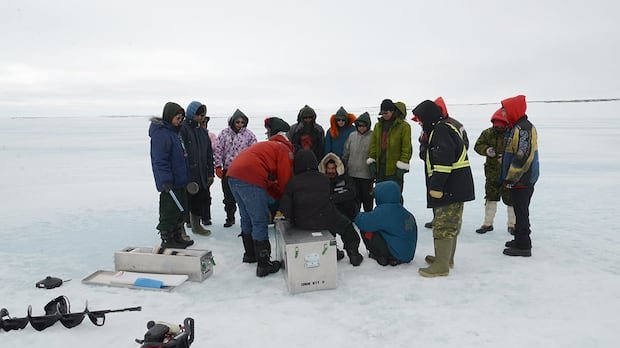
Candice Sudlovenick, an outreach programs manager at SIKU, finds fulfillment in her role, which she attributes to her early involvement with Ikaarvik over a decade ago. She describes the experience as empowering, highlighting the importance of having a voice that is heard. A recent publication in Arctic Science, co-authored by Danielle Nowosad, a postdoctoral fellow at the University of Calgary of Métis heritage, explores the methods of Inuit leadership in research.
Ikaarvik was established by a group of Inuit youth who graduated from the Environmental Technology Program at Nunavut Arctic College in 2010, aiming to extend their environmental work beyond formal education. The organization’s mission is to transform obstacles into opportunities by preparing Inuit youth for careers that bridge traditional Inuit knowledge with scientific research.
Sudlovenick emphasized the shift in research relationships with Inuit communities brought about by Ikaarvik, challenging stereotypes and advocating for broader roles beyond traditional support functions. Nowosad noted the longstanding efforts of Inuit communities to achieve deeper engagement in research activities. She highlighted the alignment between Western science and Inuit Qaujimajatuqangit, emphasizing their shared rigor and the unique respect embedded in traditional knowledge.
Despite improvements in collaboration, challenges persist in research practices. Nowosad pointed out the discrepancies between academic timelines and community-based work demands, underscoring the need for a balance between research outputs and meaningful relationships with communities. Recognizing the growing significance of local knowledge in the face of accelerated climate change in the Arctic, both researchers and community leaders stress the value of Indigenous knowledge alongside Western science, particularly in empowering youth in northern regions. The integration of technology and traditional knowledge among younger generations is seen as a promising pathway to bridging the gap between different knowledge systems.

