
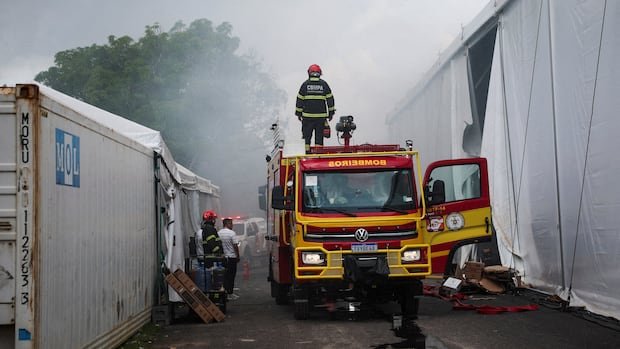
A fire incident disrupted the United Nations climate talks in Brazil, causing evacuations and halting negotiations for most of the day without reaching significant agreements. Thirteen individuals received treatment for smoke inhalation following the fire outbreak in the pavilion area designated for sideline events during the annual COP30 talks.
Although the fire was swiftly controlled, authorities ordered the evacuation of the entire site for safety inspections, leading to uncertainty about when the conference proceedings would resume. The possibility of a delayed conclusion to the talks loomed as the planned late-night work session for ministers and diplomats on Thursday was jeopardized.
The COP30 presidency had been striving to finalize a draft agreement on contentious issues related to finances, fossil fuel emission reductions, and trade before the fire incident, aiming for a consensus within a tight timeframe. The failure to secure a deal by the initial target date of Wednesday, with the presence of Brazil’s president and the UN secretary-general, added complexity to the negotiations.
Veteran climate observer Alden Meyer noted that the fire interruption would impede progress and pose challenges in bridging existing gaps, potentially affecting the overall outcome of the talks. While some individuals saw a silver lining in the collaborative response to the emergency, others expressed concerns about the limited time available and the risk of settling for subpar agreements.
UN Secretary-General António Guterres urged countries to show flexibility and compromise in delivering results, emphasizing the critical juncture of the talks and the global attention on the proceedings. The call for good faith engagement in the remaining days of negotiations underscored the urgency of addressing key issues that had missed earlier deadlines.
The conference’s extended timeline and the unresolved issues surrounding fossil fuel phase-out plans underscored the need for consensus and action. Guterres emphasized the importance of supporting vulnerable nations in adapting to climate impacts, highlighting the call to increase adaptation finance significantly.
The emotional appeals from countries affected by climate-related disasters underscored the urgency of tangible actions over mere discussions. The need for financial aid, along with addressing trade barriers and enhancing transparency in climate reporting, remained crucial aspects of the negotiations as countries sought a comprehensive approach to combating climate change.

