
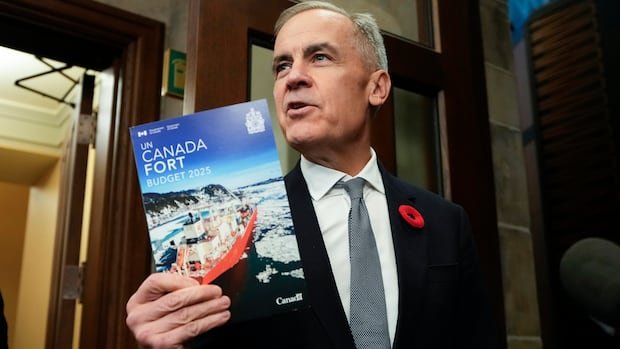
Indigenous leaders have raised alarms following this year’s federal budget, which did not secure ongoing funding for crucial reconciliation programs beyond spring 2026, sparking concerns over potential cuts or terminations.
Upon the release of Prime Minister Mark Carney’s first budget for the minority Liberal government, a chart titled “Indigenous Reconciliation” began circulating on social media, revealing that while certain programs like on-reserve education and emergency management received additional funding for the current year, subsequent years showed zeros across the board.
Assembly of First Nations National Chief Cindy Woodhouse Nepinak expressed worries about the future of these programs, labeling them as “sunset programs” with fixed funding or end dates that require further discussion. Woodhouse Nepinak vowed to seek immediate clarification from the Prime Minister’s Office regarding any potential cuts.
Similarly, President Natan Obed of Inuit Tapiriit Kanatami raised concerns about the Inuit Child First Initiative, slated to sunset in March with no new funding allocated in the budget. Obed indicated that legal actions could be pursued if the initiative’s services to Inuit children are compromised.
Indigenous Services Minister Mandy Gull-Masty clarified in an interview that the government aims to modernize the delivery of sunsetting programs and align outcomes with community needs rather than terminating them.
One of the programs set to expire in 2026, Urban Programming for Indigenous Peoples, faced a funding freeze in the budget, raising concerns among organizations like the National Association of Friendship Centres about the continuity of critical services for Indigenous communities.
While some, like the Manitoba Métis Federation, welcomed the budget, others expressed mixed reactions. The budget proposes a two percent spending cut at Indigenous Services Canada and Crown-Indigenous Relations and Northern Affairs Canada, amounting to about $500 million annually. Notable budget allocations include $2.3 billion for safe water in First Nations and $10.1 million for Indigenous consultations on expedited projects.
Despite some positive aspects, concerns linger over the lack of funding for key initiatives like tuberculosis elimination and the Inuit Child First Initiative. Indigenous leaders remain cautiously optimistic but emphasize the need for sustained commitment to reconciliation efforts.
Overall, the budget has evoked a range of responses, with stakeholders closely monitoring developments and advocating for continued support for Indigenous communities.

