
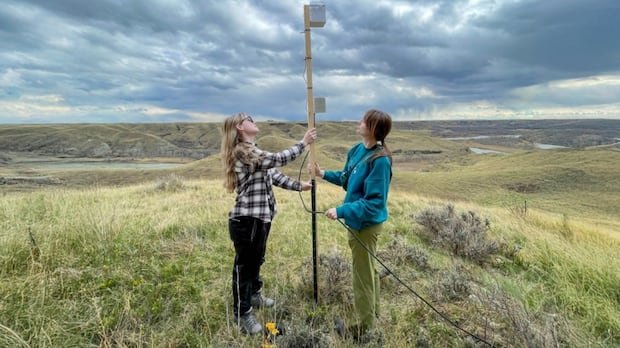
A groundbreaking research project at the University of Windsor is currently monitoring the nocturnal migration of birds across Canada in real-time. Graduate students Natalie Emerick and Madison Bygrove have deployed 100 acoustic recorders from Vancouver Island to Newfoundland to capture bird sounds using AI technology called Motus Audio.
The recorders, equipped with microphones, collect and categorize bird calls, enabling researchers to identify species and track their movements during the night. This initiative marks the first time such detailed research on nocturnal bird migration has been conducted in eastern Canada.
The research team credits advancements in tracking technology for making this project feasible, as it involves analyzing vast amounts of data collected each night. By leveraging existing Canadian migration monitoring networks, the researchers strategically placed the devices with the help of volunteers and collaborators involved in bird conservation.
One key aspect of the study is investigating the impact of artificial night light on bird behavior. The researchers believe that birds may use calls to navigate in areas with high artificial light, indicating potential disorientation caused by bright lights.
As the fall migration season progresses, Emerick and Bygrove are refining their data analysis techniques to gain valuable insights into bird migration patterns. The Motus Audio technology, originally developed with government funding, has enabled researchers like Ryan Norris from the University of Guelph to participate in this nationwide effort to monitor bird populations in hard-to-reach areas like the Canadian boreal forest.
Despite the challenges of identifying bird species based on their flight calls, the researchers are optimistic about the project’s potential to provide a comprehensive understanding of bird movements across Canada throughout the year. Norris emphasizes the importance of this research in shedding light on factors influencing bird populations and declines.
Through this innovative research approach, the team aims to create an “audio curtain” across Canada, offering new perspectives on bird behavior and migration that could inform conservation efforts and address declines in bird populations.

