
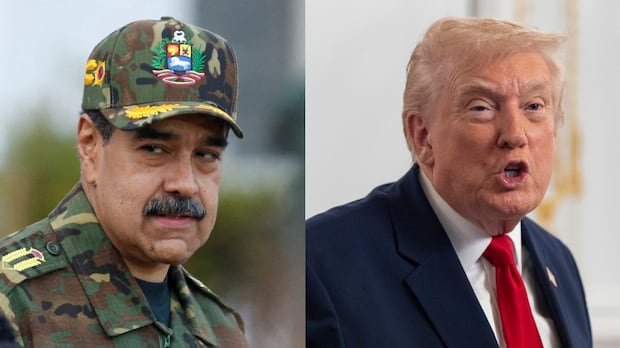
U.S. President Donald Trump declared on Saturday that the airspace surrounding Venezuela should be closed entirely, sparking concerns about U.S. pressure on Venezuelan leader Nicolas Maduro. Maduro’s government labeled Trump’s statement as a “colonial threat” undermining Venezuela’s sovereignty.
The White House did not provide clarity on Trump’s message posted on his Truth Social platform. It remained uncertain whether this was a new policy announcement or a reaffirmation of his ongoing campaign against Maduro, which has involved several operations in the Caribbean Sea and eastern Pacific Ocean targeting boats suspected of drug trafficking and an increased naval presence in the region. These actions have resulted in over 80 fatalities since early September.
In his directive for an aerial blockade, Trump addressed “Airlines, Pilots, Drug Dealers, and Human Traffickers” rather than directly engaging with Maduro.
Venezuela’s government strongly denounced Trump’s airspace closure suggestion, condemning it as a “colonial threat” aimed at undermining the country’s territorial integrity and sovereignty. The foreign ministry characterized Trump’s remarks as a hostile, unilateral, and arbitrary act.
Furthermore, the statement mentioned the unilateral suspension by U.S. immigration authorities of biweekly deportation flights for Venezuelan migrants. Following discussions between the two governments, more than 13,000 Venezuelans have been deported this year on chartered flights, with the latest arrival in Caracas on Friday night.
International airlines began canceling flights to Venezuela after the Federal Aviation Administration advised caution due to increased military activity. While the FAA typically focuses on U.S. airspace, it issues warnings about flying over conflict zones worldwide, as seen in the recent advisory regarding Venezuela.
The Trump administration has intensified pressure on Maduro, disputing his legitimacy as Venezuela’s leader and pursuing charges of narcoterrorism. U.S. military actions near Venezuela have included bomber flights and the deployment of the USS Gerald R. Ford aircraft carrier, marking a significant U.S. military presence in the region.
Calls for enhanced oversight on U.S. military operations in the area have emerged following reports that Defense Secretary Pete Hegseth authorized the killing of crew members during a September attack on suspected drug smugglers.
Republican Sen. Roger Wicker and Democratic Sen. Jack Reed released a joint statement pledging thorough oversight into these circumstances by the Senate Armed Services Committee. Trump’s administration has explored military and non-military strategies with Venezuela, including potential covert operations by the CIA.
Despite public discussions about engaging with Maduro, details of a reported conversation between Trump and Maduro remain unconfirmed by the White House, which declined to provide further information.

