
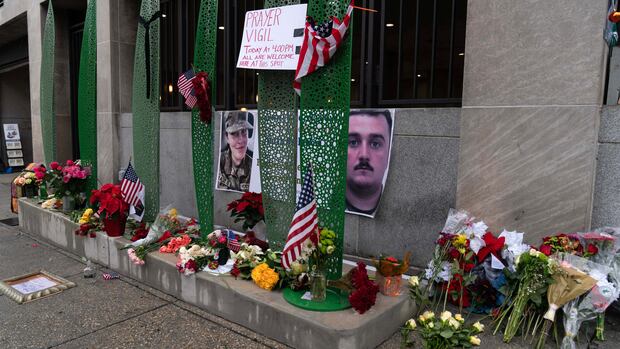

After gaining insight into Rahmanullah Lakanwal, the individual charged with shooting two National Guard members in Washington, D.C. last week, Kevin Maurer expressed that he is no longer surprised by the developments.
Although the motive behind the shooting remains unclear, investigators have discovered that the 29-year-old Afghan national was a member of a “Zero Unit,” which is a CIA-supported paramilitary group in Kandahar.
Maurer has extensively reported on the “Zero Units” during his 17 years covering the Afghanistan conflict.
His understanding of life within these units, coupled with an interview he conducted with an Afghan veteran who served with Lakanwal, leads him to suspect that these experiences may have played a role in the violent incident on November 26. The brazen daylight shooting resulted in the death of Army specialist Sarah Beckstrom, 20, and injuries to Staff Sgt. Andrew Wolfe, 24.
Maurer discussed his dialogue with the Afghan veteran in Rolling Stone. He shared his insights with As It Happens host Nil Koksal.
Here’s an excerpt from that discussion:
For someone unfamiliar with the “Zero Unit,” how would you characterize them?
The simplest way to describe the Zero Units is that they function as the CIA’s secret army. Their mission involved executing raids and commando-style operations on behalf of the CIA. Essentially, they were at the forefront of the war on terror, tasked with tracking terrorists and designated targets, including conducting raids on facilities used by suicide bombers. Their focus was primarily on the CIA’s highest priority targets, individuals they aimed to eliminate from the battlefield.
What was your initial reaction upon learning that the suspect was apprehended following the National Guard shooting?
I’ve been monitoring the Zero Units and their resettlement efforts for some time now, and I’ve had conversations with numerous advocates assisting them. The mental health challenges faced by this community, along with the difficulties of assimilation and achieving economic stability, have been overwhelming. Many advocates have shared stories of psychotic episodes and suicide attempts, so while I wish I could say I was shocked, this is something they had foreseen.
In your recent article in Rolling Stone, you mentioned interviewing a member of the suspect’s unit. What insights did they provide?
The individual I spoke with had served alongside the suspect and maintained contact in the months before the alleged incident in D.C. They described a man under immense stress, struggling to support his family, facing challenges with assimilation and language barriers, and feeling unsafe in Bellingham, Washington. He was seeking to connect with a larger Afghan community.
What was the response from the unit member upon hearing about the shooting and the suspect’s arrest?
Everyone I spoke to in connection with the Zero Unit community expressed disbelief. They condemned the actions and stated that this was contrary to their mission. Much of the Zero Unit’s purpose was to protect CIA officers — both on bases and during operations — making this incident the opposite of what they were trained for. Although they denounce it, advocates had previously warned that such an outcome was possible, particularly given the immense pressures faced by this community.
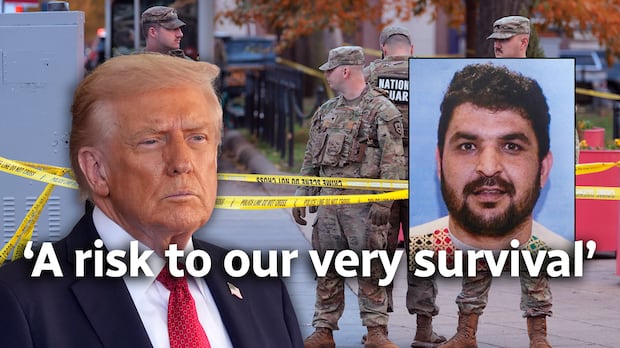
Two members of the U.S. National Guard were shot in Washington, D.C., in what officials are calling a ‘targeted attack.’ Andrew Chang breaks down Trump’s accusations and vow for retribution. Plus, are Trump’s global tariffs illegal?
After resettling, you indicated that they sought assistance from the CIA, specifically the suspect’s unit member. What was the outcome?
The group chat I reviewed revealed pleas for aid that went unanswered by the CIA. This particular unit, the Zero Units, has faced challenges in obtaining special immigrant visas due to their covert operations. As a result, the CIA has not been forthcoming in recognizing them as vetted Afghan soldiers, complicating their SIV [Special Immigrant Visa] application process compared to other Afghans being resettled.
Reflecting on your initial encounters with those in the Zero Units compared to your recent discussions, how do they differ?
These are individuals who fought for 10 to 20 years and now find themselves without a homeland. It’s sometimes hard for us to comprehend that many of these soldiers believed in the cause they were fighting for, envisioning a diplomatic Afghanistan that no longer exists. Many carry tattoos of their flag, and the deep sense of loss they feel for their country is something they cannot easily overcome.
You’ve mentioned that mental health issues may have played a role in the suspect’s actions. The New York Times has reported on similar concerns.
It’s undeniable that anyone who goes to war returns forever changed. For those who have fought as long as these men have, performing missions that involve hunting down suicide bombers and witnessing the deaths of comrades — nearly everyone I spoke with had lost someone close — it is impossible to absorb that level of trauma without it leaving a lasting impact.
Following the shootings, the Trump administration announced a freeze on all visa applications from Afghanistan, including for those who fought alongside American forces. Given the already precarious situation faced by these individuals, do you believe this case might shed additional light on their struggles, despite the administration’s decision?
I hope we can recognize the gravity of this situation. My aim in reporting is to foster understanding and compassion for a community striving to resettle, which is predominantly eager to integrate into American society and has earned that opportunity through their service in Afghanistan.

