
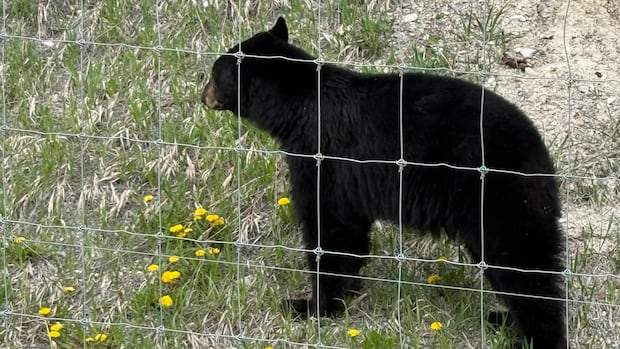
The tragic black bear attack last week that resulted in the deaths of a couple in Saskatchewan occurred just months after another bear-related fatality in the province. Nevertheless, experts assert that such lethal encounters remain exceedingly uncommon.
Saskatchewan’s Ministry of Community Safety confirmed that a black bear played a role in the deaths of Jay and Deb MacDonald, whose bodies were discovered near McTavish Lake, a secluded area about 90 kilometers north of La Ronge.
The couple’s deaths follow closely behind the tragic incident involving 27-year-old Hrishikesh Koloth, who lost his life in a separate black bear attack at a remote uranium exploration site in northeastern Saskatchewan—marking the fourth fatal bear encounter on record in the province.
-
Regina couple killed in bear attack at McTavish Lake
-
Man killed in bear attack identified as MMA fighter Hrishikesh Koloth from India
In 2020, another fatal attack occurred when 44-year-old Stephanie Blais was killed near her family’s cabin located north of Buffalo Narrows, approximately 220 kilometers northwest of La Ronge.
The province’s first recorded bear maulings took place in 1983 when two men were killed in separate incidents near Nipawin Provincial Park, now known as Narrow Hills Provincial Park.

Wildlife officials have euthanized a black bear believed to be involved in the tragic deaths of a Regina couple in remote northern Saskatchewan. The bodies of Jay and Deb MacDonald were found near their cabin at McTavish Lake.
An academic study from Lakehead University revealed that across Canada, there were 39 fatalities resulting from bear encounters between 1990 and 2023. Of these, 17 were due to grizzly bear attacks, while 22 involved black bears.
Although incidents of this nature are infrequent, they tend to occur more often in remote locations, according to Doug Clark, a bear specialist at the University of Saskatchewan.
“Before this year, it was generally believed that such incidents were quite rare in Saskatchewan. In the broad context, they still are,” he remarked.
Michael Runtz, a retired biology professor from Carleton University in Ottawa, noted that despite having encountered hundreds of black bears in remote areas of Ontario, he has “never experienced an attack by a black bear.”
Bears attack when searching for food: expert
According to Runtz, black bears are generally perceived as less aggressive than their grizzly counterparts.
“Black bears usually exhibit more timid and shy behavior, which is why attacks by them are quite uncommon,” he explained.
He stated that when attacks do occur, they are typically large male bears exhibiting predatory behavior.
In most situations, he claims that the underlying cause of the attack is a bear that is healthy and “simply trying to find a new food source, which happens to be a human.”
Clark speculated that the time of year may have contributed to the recent series of fatal bear attacks in Saskatchewan, pointing out that there was still about one meter of snow in the woods at the site of the first attack in May.
“One has to wonder if food availability is linked to this,” he remarked. “Such conditions can stress bears.”
-
Multiple bear sightings reported in Calgary; biologist says they’re not uncommon in the city
-
Bear attack near Cumberland, B.C., sends 1 to hospital, prompts advisory
Conservation officers dispatched to the site of the recent attack in Saskatchewan were able to locate and euthanize a bear believed to be responsible for the deaths of Jay and Deb MacDonald, according to a news release from the province.
The bear’s remains are being transported to the Western College of Veterinary Medicine in Saskatoon for a necropsy, as stated in the release.
The findings will provide officials with more insight into the bear’s condition, according to Clark, and help clarify the circumstances surrounding the attack.
Safety recommendations
Despite the rarity of these attacks, Clark emphasizes the need for heightened caution when venturing into remote areas of the province where bear populations are prevalent.
“If you are flying into a location, that is when you may encounter a bear that is more likely, for various reasons, to exhibit this type of [predatory] behavior,” he advised.
In the event of a black bear encounter, Runtz recommends against attempting to flee “and certainly do not play dead, as has been suggested for grizzly bears.”
Instead, he recommends slowly backing away while trying to appear larger and more threatening by shouting, raising your arms, or even throwing objects at the bear.
Both Runtz and Clark also advise individuals to carry bear spray.

