
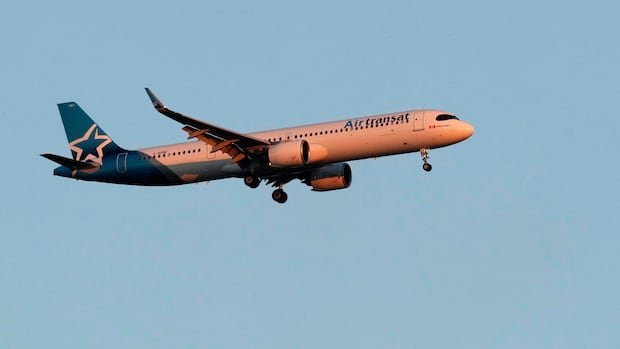
The union representing Air Transat’s pilots announced on Wednesday that a vast majority of its members have voted to authorize a potential strike. Although this gives the union the power to declare a strike starting from December 10, it does not serve as an immediate strike notice, clarified the Air Line Pilots Association (ALPA) in a press release.
Air Transat emphasized that this vote is a standard part of the negotiation process and that operations are running as usual. The airline stated its commitment to reaching a collective agreement that meets the needs of both parties, aligns with market conditions and the company’s requirements, and acknowledges the pilots’ contributions.
Negotiations between ALPA and the airline commenced in January, months before the existing collective agreement was due to expire. The union is advocating for a new agreement that safeguards job security and enhances working conditions, compensation, and overall quality of life. Over 99% of the pilots who participated in the vote favored a strike if deemed necessary, according to the union.
Following the conclusion of conciliation on November 18, the two parties are currently observing a 21-day cooling-off period that concludes on December 10, as per the union’s statement. Bradley Small, chair of the Air Transat ALPA master executive council, expressed the union’s determination to secure an updated contract that aligns with current industry standards.
Small highlighted that Air Transat pilots are operating under a contract that is considered inferior compared to agreements held by WestJet and Air Canada pilots. The union’s goal is to negotiate a fair deal that reflects modern standards without resorting to a strike.
In related developments, Air Canada pilots recently ratified a four-year collective agreement that increased their wages by approximately 42%, while WestJet’s pilots secured a 24% pay raise over four years in 2023, setting a new benchmark for labor gains in the aviation sector.
Karl Moore, an airline expert and associate professor at McGill University, noted that the strike authorization vote at this time of year, particularly during the busy holiday season, serves as a strategic bargaining tool due to the airline’s heightened profitability during this period. Moore suggested that both parties have a mutual interest in avoiding a strike to prevent disruptions for passengers and the pilots themselves.
Given the potential economic impact and disruption to travel, there is a possibility that the federal government could intervene with back-to-work legislation if necessary, similar to previous interventions in labor disputes within the aviation industry.

