
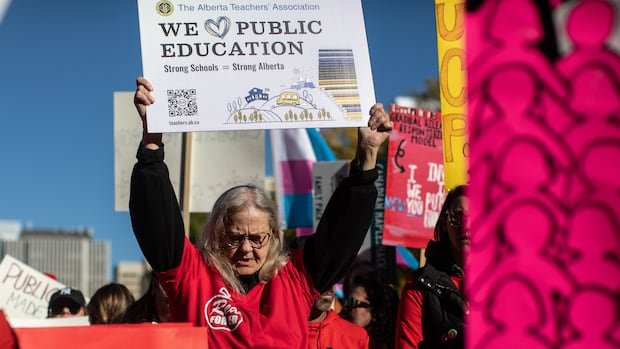
A recent survey by the Angus Reid Institute indicates that teachers facing a lockout in Alberta are receiving more public backing than the provincial government amid a contract disagreement that has led to the cancellation of classes for a second consecutive week. The online poll, which garnered responses from over 800 Albertans last Wednesday to Friday, reveals that 58% of the public is in support of Alberta teachers. Out of those surveyed, 21% sided with the provincial government, while 18% remained undecided.
Shachi Kurl, President of the Angus Reid Institute, emphasized the importance of understanding public sentiment as negotiations reconvene. She highlighted that public opinion could play a pivotal role in either motivating a resolution or prompting each party to solidify their position.
Approximately 51,000 public, Catholic, and francophone school teachers in the province initiated a strike on October 6 after rejecting the latest contract offer from employers by almost 90%. The discord centers around issues such as teaching conditions, class sizes, support for students with special needs, and salary concerns raised by the Alberta Teachers’ Association.
The Teachers’ Employer Bargaining Association (TEBA), representing school boards and the government, initiated the lockout of teachers last Thursday, leading to the cancellation of classes for an estimated 750,000 kindergarten to Grade 12 students across Alberta.
The survey conducted by Angus Reid Institute involved 807 participants from the organization’s forum. Notably, the poll results indicated a higher level of support for teachers from NDP voters compared to United Conservative Party supporters. Results showed that a considerable percentage of respondents felt that public school classes had too many students and that teachers were not adequately compensated.
Moreover, a significant portion of respondents expressed dissatisfaction with the government’s management of education in the province. The survey also revealed disruptions to daily routines for nearly two-thirds of respondents with children in school due to the ongoing strike.
Lori Williams, an associate professor of policy studies at Mount Royal University, noted that the survey findings could impact the negotiation strategies of both parties in the contract dispute. Williams highlighted the leverage teachers hold at the bargaining table due to widespread concerns over class sizes and government policies related to K-12 education.
Amrit Rai Nannan, a middle school teacher and union president, resonated with the survey results, reflecting on the overwhelming support teachers have received since the strike commenced. Rai Nannan underscored the teachers’ commitment to bringing about positive changes for students, despite the challenges they face.
As the situation unfolds, the evolving conflict may influence public opinion and potentially shape the outcome of the standoff. Education Minister Demetrios Nicolaides acknowledged the impact of the strike on students and families, emphasizing efforts to address the complexity of modern classrooms.

