
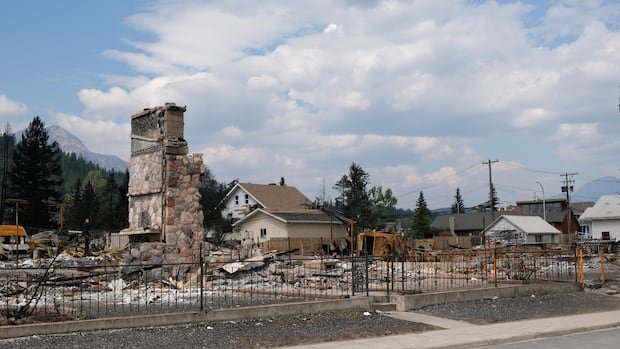
Canada’s wildfire seasons are experiencing longer durations, larger sizes, and increased devastation, as indicated by a comprehensive analysis spanning six decades of fire data conducted by the Canadian Forest Service under the federal government. The study reveals a shift towards fewer but significantly larger wildfires causing more extensive damage than in previous years, aligning with previous observations made by federal researchers.
A study published by fire scientists at Natural Resources Canada in 2019 highlighted a consistent escalation in wildfire activity since the mid-20th century, driven by elevated temperatures and prolonged fire seasons. The research indicates varying patterns across regions, with some areas showing notable increases in burned areas while others remain stable or show declining trends. Although human-caused fires were believed to be decreasing due to prevention measures, the study suggests a resurgence in such fires since the early 2000s, attributed to hotter and drier conditions making fire control more challenging.
An updated study, recently featured in the Canadian Journal of Forest Research, expands on the previous analysis up to 2024 using enhanced satellite mapping techniques and data from nine additional fire seasons, including the severe years of 2021, 2023, and 2024. The findings demonstrate a continuous rise in wildfire-affected areas across various eco-zones in Canada, including regions historically considered lower risk due to wetter conditions, such as the Pacific Northwest and Atlantic Canada, which now exhibit flat or increasing fire patterns.
Additionally, the research highlights the increasing dominance of the largest fires in causing significant damage. While lightning remains a major ignition source for wildfires, there has been a resurgence in human-caused fires, particularly larger ones, since the early 2000s, attributed to the challenging conditions for fire suppression caused by climate change.
Chelene Hanes, a research scientist at the Canadian Forest Service, emphasized that escalating human-caused fires, especially the larger ones, are a result of drier fuel conditions. She noted that the intensity and scale of these fires often surpass conventional firefighting capabilities, necessitating a shift towards containment and protection strategies rather than direct fire suppression efforts.
The evolving wildfire landscape has had visible impacts on a national scale, with recent wildfire seasons witnessing unprecedented events across Canada. Notable incidents include the devastating wildfires in British Columbia in July 2021, the historically severe 2023 wildfire season, and the destructive wildfire in Jasper National Park in Alberta in 2024, underscoring the growing challenges posed by wildfires.
The transformation in Canada’s wildfire scenario is also reverberating in the insurance sector, with insurers warning of heightened wildfire risks reshaping loss estimates, premiums, and long-term housing decisions nationwide. The insurance industry has witnessed a substantial surge in wildfire-related losses over the past decade, prompting adjustments in coverage pricing for high-risk areas to mitigate overall risk exposure.
Insurance professionals emphasize the importance of accurately pricing risk in wildfire-prone regions, with adjustments in coverage reflecting the increased vulnerability to wildfire events. Despite these adaptations, wildfire coverage remains a standard inclusion in home insurance policies across Canada, ensuring widespread availability of protection without resembling the situation in California, where insurers ceased underwriting policies in high-risk wildfire zones due to repeated catastrophic losses.

