
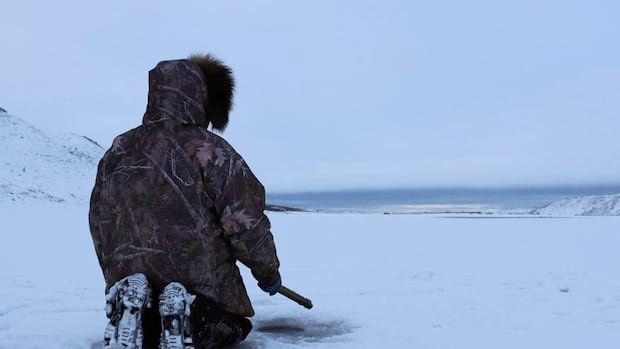
Lawrence Ruben effortlessly drills through six inches of ice on the Hornaday River near Paulatuk, N.W.T. using an electric auger, completing the task in just four seconds. As water and ice particles spurt upwards, he humorously refers to the auger as a groundbreaking invention. With a cabin located a short distance away from the riverbank, Ruben and his wife often frequent this spot for relaxation and Arctic char fishing.
Despite their recent trip with family members yielding no catch, the usual overwintering patterns of Arctic char in the Hornaday and Brock rivers seem to have shifted, leading to unpredictable movements. Concerned about this change, the community has joined forces with Fisheries and Oceans Canada on a research project involving the tagging of 38 Arctic char with acoustic monitors to track their movements.
The acoustic tags, designed to last four years, emit imperceptible signals detected by receivers placed in the Arctic Ocean. This initiative aims to reveal the fish’s whereabouts and behaviors, shedding light on critical information such as migration triggers. Moreover, the project seeks to understand how environmental changes, including sea ice thickness reductions, impact the fish’s habitat and food sources.
In collaboration with local harvesters, federal scientists have implanted transmitters in the tagged fish, allowing data collection on their movements. The study also involves the installation of receivers in freshwater lakes linked to Darnley Bay, intending to provide a comprehensive understanding of the char’s migration patterns and habitat preferences.
Reflecting on the impact of climate change, Ruben recalls the noticeable alterations in the region since 2010, including early river thaws and increased erosion. These environmental shifts have affected the spawing grounds of Arctic char, posing challenges for the species’ sustainability. Despite these challenges, Ruben emphasizes the vital role of char as a crucial subsistence resource for the Paulatuk community.

