
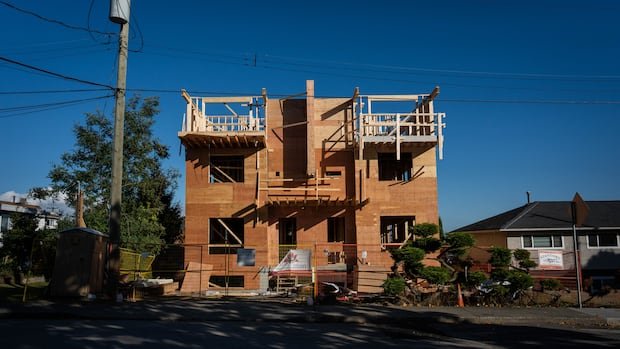
Public backlash against the increasing size of new multiplex homes in Burnaby, B.C., has prompted city councillors to tighten regulations on construction standards. As a result, multiplex homes in the city will now be smaller in size and will require more on-site parking spaces.
Last July, Burnaby, a city with approximately 250,000 residents located east of Vancouver, adopted regulations allowing for multiplex housing following a provincial mandate requiring most B.C. municipalities to permit between four and six homes on single-family lots. This change meant that multiplex homes could be built on any of Burnaby’s 31,000 previously designated single-family residential lots.
Initially, the city’s multiplex bylaw permitted the construction of homes up to four storeys, including laneway homes, triplexes, quadplexes, and cottage courts. However, following a recent council decision, future multiplex buildings will now be limited to three storeys, with floor areas reduced by 33 to 60 percent.
Additionally, developers will now be required to provide a higher minimum number of on-site parking spaces. This decision came after concerns were raised by residents like Tim O’Meara, a retired professional engineer, who expressed shock at the size of new multiplex constructions near his home and the potential impact on property values.
Burnaby Mayor Mike Hurley acknowledged the public discontent, emphasizing that the city is responsive to residents’ opinions and is striving to strike a balance between accommodating change and maintaining neighborhood aesthetics. He highlighted the city’s preference for multiplex homes between 1,400 and 1,900 square feet, as opposed to the larger 2,600 square foot structures previously being built.
While some residents have criticized the reforms as overly restrictive, the B.C. government has signaled its commitment to ensuring that municipalities comply with housing targets by implementing minimum standards for multiplex construction if necessary. The aim is to address the housing shortage by promoting the development of more affordable housing options in established neighborhoods.
Builders like Bryn Davidson from Lanefab noted that public resistance to new housing types is not uncommon, citing similar reactions to previous housing innovations. Acknowledging the need for adjustments in response to community feedback, Davidson emphasized the importance of evolving housing policies without completely reversing progress made.
In conclusion, the recent changes to Burnaby’s multiplex housing regulations reflect a balance between accommodating new housing developments and addressing community concerns over size, aesthetics, and neighborhood compatibility.

