
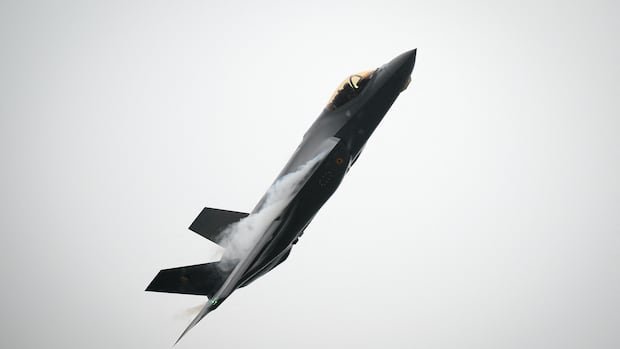
The purchase of the F-35 fighter jet has sparked significant debate in recent Canadian history. These American-made aircraft are not only expensive but also carry considerable political implications. Amid escalating trade tensions with the U.S. and concerns about Canadian sovereignty, a review was initiated earlier in the year. However, Canada has already committed to acquiring 16 F-35s under the current contract, with the option to procure up to 88 of these advanced fifth-generation stealth fighters.
Chauncey McIntosh, the vice-president and general manager at Lockheed Martin overseeing the F-35 program, emphasized the capabilities of the jet, stating that it is the most advanced, survivable, and lethal fighter aircraft available. The potential purchase of the complete set of F-35s would mark the largest investment in the Royal Canadian Air Force in over three decades, with the cost estimated at $27.7 billion, up from the previously cited $19 billion.
Despite ongoing controversies, particularly fueled by remarks from U.S. President Donald Trump, the production of the F-35 reflects the deep integration of the Canadian and American economies. Various parts of the jets are manufactured in both countries before assembly. Canada has been an integral part of the program since its inception in the late 1990s, contributing to the production and employment opportunities within the country.
Industry Minister Melanie Joly has been advocating for increased economic benefits for Canada from Lockheed Martin as part of the jet purchase agreement. Each F-35 jet carries a price tag ranging from $82 million to $100 million US, with a portion of about $3.2 million Cdn worth of parts sourced from Canada.
The manufacturing process of the F-35 involves a highly sophisticated production line at Air Force Plant 4 in Fort Worth, Texas, operated by Lockheed Martin. Canadian contributions to the program span across the country, with components such as the horizontal tail assembled in Winnipeg, engine sensors from Ottawa, and composite materials from Lunenburg, N.S.
Lockheed Martin highlighted the involvement of over 100 Canadian companies in the F-35 program, employing around 2,000 Canadians. The program’s economic benefits are projected to align with Canada’s commitment to acquiring 88 jets. Despite differing opinions on the procurement strategy, the involvement of Canadian companies in the F-35 program continues to be a source of pride and economic value for the country.

