
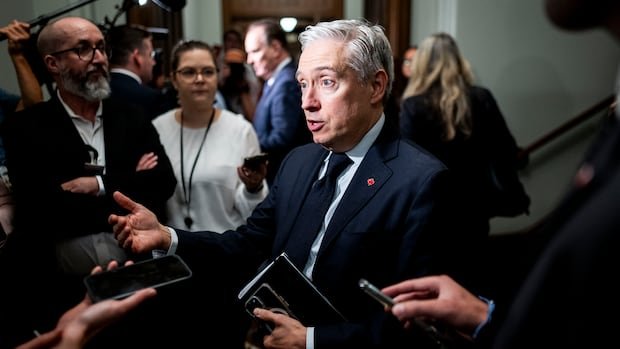
The federal government under the leadership of Finance Minister François-Philippe Champagne revealed plans to establish a dedicated financial crimes agency aimed at combatting the rising prevalence of online scams. This initiative is part of a comprehensive national anti-fraud strategy set to be unveiled on November 4 alongside the fall budget announcement. Minister Champagne emphasized the urgency of addressing increasingly sophisticated financial scams, such as ghost texts, phishing links, and deceptive bank emails, which are posing a significant threat to Canadians.
Recent data from the Canadian Anti-Fraud Centre indicates a substantial spike in financial losses due to fraud, with Canadians estimated to have lost approximately $643 million in 2024, marking a nearly threefold increase since 2020. To bolster efforts in combating financial crime, the government is proposing amendments to the Bank Act, mandating banks to implement robust anti-fraud policies and procedures.
The establishment of a new financial crimes agency is expected to be a pivotal component of the anti-fraud strategy, although specific funding details are yet to be determined as confirmed by Champagne’s spokesperson, John Fragos. The announcement was made in the presence of key officials including Public Safety Minister Gary Anandasangaree, Wayne Long, secretary of state for Canada Revenue Agency and financial institutions, and Stephanie McLean, secretary of state for seniors.
In parallel developments, the Conservative Party, led by Pierre Poilievre, has voiced concerns over fiscal responsibility, urging for what they term as “an affordable budget.” Poilievre called for tax cuts and a cap on the deficit to not exceed $42 billion, highlighting the increasing deficit projections revealed by the parliamentary budget officer. Despite these calls for fiscal restraint, the International Monetary Fund acknowledged Canada’s comparatively strong fiscal standing among G7 nations.
In response to queries regarding deficit targets, Minister Champagne cited the IMF’s assessment to justify the government’s ability to make strategic investments while maintaining fiscal discipline. The upcoming budget, under Prime Minister Mark Carney’s leadership, is anticipated to address deficit concerns, with a focus on responsible financial decisions. The Conservatives have proposed measures to reduce the deficit by optimizing resource development, cutting unnecessary expenditures, and revising tax policies.
The Bloc Québécois has also presented a list of demands for the budget, emphasizing essential priorities like increased federal health transfers, infrastructure investments, and enhanced support for various social programs. With the prospect of potential budget support from the New Democrats, discussions around budget priorities, including investments in job creation, healthcare, and housing, are gaining prominence in parliamentary deliberations.

