
Canada’s economy shrank in the last quarter, falling short of expectations, as manufacturers heavily depleted their inventories to meet demand rather than producing new goods, according to data from Statistics Canada released on Friday. Gross domestic product (GDP) declined at an annualized rate of 0.6% in the October-December period, down from a revised 2.4% growth in the previous quarter. This resulted in the country’s overall growth for 2025 reaching 1.7%, marking the slowest annual growth since the COVID-impacted year of 2020.
A significant factor contributing to the slower GDP growth in 2025 was lower exports, especially to the United States, as highlighted in the report by Statistics Canada. Despite increases in exports, household spending, and government investment in the quarter, these gains were not sufficient to offset the negative impact of depleting inventories.
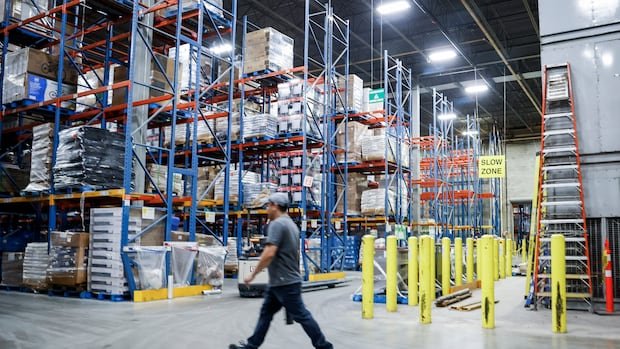
Businesses withdrew $23.46 billion from their inventories at an annualized rate, nearly matching the figure from the same period in 2024. Prior to the fourth quarter, companies had been actively building up their inventories. The Bank of Canada had anticipated an economic growth rate of approximately 1.7% for the year, with expectations of flat growth in the fourth quarter.
Throughout the previous year, the economy fluctuated between periods of growth and contraction each quarter, driven by shifts in exports influenced by U.S. tariffs. Statistics Canada revised the annualized growth rate for the third quarter downward to 2.4% and adjusted the second quarter contraction rate to 0.9%.
Apart from the impact of inventory depletion, investments in residential structures, including apartments, condos, and houses, were another significant factor contributing to the decline in GDP in the fourth quarter, with a 4.4% annualized drop in residential structure investment.
While Canada experienced a decline in exports to the U.S., there was a 1.5% rise in exports in the fourth quarter, primarily due to increased unwrought gold exports. Household spending increased by 0.4%, and total capital investment grew by 0.8%, driven by heightened government investment in weapons systems.
On a month-on-month basis, GDP rose by 0.2% in the latest month, reflecting an increase from the previous period with no change. BMO’s chief economist, Douglas Porter, noted that the setback in the last quarter due to inventories was an isolated incident and does not reflect the underlying economic momentum. However, persistent uncertainties related to tariffs and trade continue to weigh on the economy.
An initial estimate suggests that GDP may stall in January, with indications that the manufacturing sector contracted at the beginning of the year. Statistics Canada cautioned that the estimate is subject to revision.

