
Warren Shepell encountered a disconcerting situation while boarding his flight from Cleveland back to Toronto this month. As he prepared to board the plane, Shepell was approached by two uniformed officers on the boarding ramp, and one of them took his photograph without any explanation.
Feeling surprised and violated by the incident, Shepell, a well-known Canadian psychologist, expressed his dismay at the lack of information provided by the officers. This experience highlights a new protocol where Canadian travelers entering and exiting the United States will now be photographed in various transportation modes as part of an enhanced security measure.
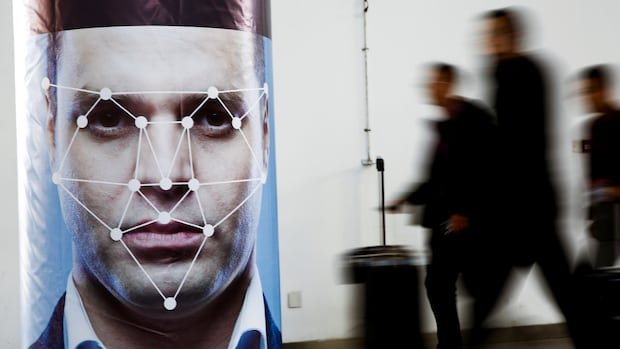
For nearly a decade, the U.S. Customs and Border Protection (CBP) has utilized facial biometrics to verify the identities of international passengers arriving at U.S. airports. This process involves capturing travelers’ photos and using biometric facial comparison technology to ensure their identity matches the information on their travel documents.
Expanding this initiative, CBP aims to collect images of departing passengers at all international U.S. airports, sea ports, and land borders. The agency plans to fully implement facial biometric technology at land borders by next year and expects complete deployment at sea ports and airports within the next three to five years.
A recent rule announced by the U.S. Department of Homeland Security mandates non-U.S. citizens, including Canadians, to participate in the facial biometrics program, effective December 26. These photos will be retained in a DHS database for up to 75 years.
While CBP emphasizes the benefits of facial biometrics for accurate records and enhanced security, privacy advocates raise concerns about potential misuse of the technology. Jeramie Scott from the U.S. Electronic Privacy Information Center warns about the risks associated with the lack of federal regulations on facial biometrics, citing fears of data misuse and privacy violations.
Despite assurances from CBP regarding privacy safeguards and limited retention periods for U.S. citizens’ photos, critics remain wary of the long-term implications of widespread facial biometrics adoption. This heightened surveillance measure has sparked debates over privacy infringements and potential travel deterrence among Canadians, including Warren Shepell, who now questions future visits to the U.S. amid growing privacy concerns.
The looming implementation of mandatory facial biometrics for travelers raises uncertainties about its impact on tourism and individual privacy rights, prompting a reevaluation of travel decisions, especially in light of the evolving security landscape at U.S. borders.

