
Weeks after the Canadian government’s announcement to permit a limited quantity of Chinese-manufactured vehicles into the Canadian market, concerns have been raised regarding potential data privacy risks. However, this apprehension may not deter consumers searching for new vehicles.
During their visit to the Canadian International AutoShow, Dianne Dougall and Pat Shephard, who were exploring options for an electric vehicle (EV) to replace their Tesla, expressed interest in Chinese-made EVs. They indicated that data privacy concerns were no more troubling than with any other connected vehicle, highlighting that data storage involving various countries, including the United States, is a common issue.
Another attendee at the auto show, Debbie Perriccioli from Waterdown, Ont., who is nearing the end of her vehicle lease, shared a similar sentiment. She mentioned that privacy concerns were becoming a thing of the past and would not deter her from considering a Chinese-made vehicle.
Survey data has shown that 61% of Canadians surveyed by Leger between Jan. 30 and Feb. 2 supported the introduction of Chinese EVs into the Canadian market. Vehicle quality and impacts on the Canadian auto industry were cited as primary concerns by a higher percentage of respondents compared to worries about privacy and security.
Experts interviewed by CBC News acknowledged that data security remains a significant issue for digitally connected vehicles, irrespective of their country of origin. They emphasized that Canada’s privacy laws are not robust enough to safeguard consumers against potential data access by the manufacturing country, including China.
The increasing digitization of vehicles has transformed them into “computers on wheels,” noted David Masson, Vice President and Field Chief Information Security Officer at Darktrace. Various data, including voice recordings, location information, driving speed, music preferences, and smartphone data, can be collected by modern vehicles.
Critics like Pierre Poilievre and Doug Ford have raised concerns about the agreement with China, labeling Chinese EVs as potential “roving surveillance systems” and “spy cars.” Industry leaders have also expressed apprehension, with Brian Kingston, CEO of the Canadian Vehicle Manufacturers’ Association, criticizing the decision to allow Chinese vehicles into the market.
Regarding the lack of a robust system for data security, experts emphasized the need for stringent regulations to protect consumer data. Despite assurances that Chinese vehicles entering the Canadian market will adhere to Canadian security standards, concerns remain about data transmission to China.
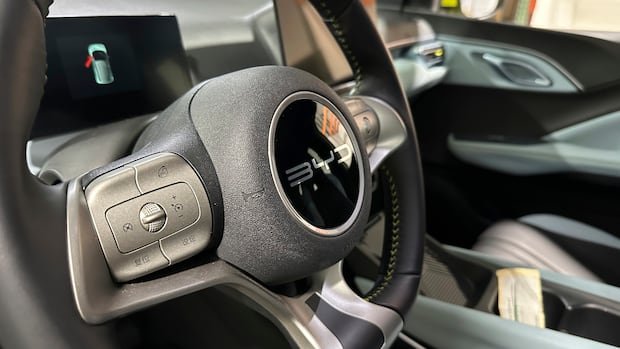
BYD appears to be the primary Chinese automaker registered to import passenger cars into Canada, as per Transport Canada records. However, concerns about national security and economic impact persist, with comparisons drawn to past scrutiny of Chinese companies like TikTok and Huawei.
National security analyst Stephanie Carvin highlighted that the entry of Chinese-made vehicles into Canada should be viewed more from the lens of economic national security rather than a new data security breach. The concern lies in how these vehicles could impact Canada’s domestic automobile market due to potential subsidies and support from the Chinese government.
Overall, the debate surrounding Chinese EVs in Canada revolves around balancing economic interests with data privacy concerns, as the automotive industry grapples with the implications of opening up to Chinese-manufactured vehicles.

