
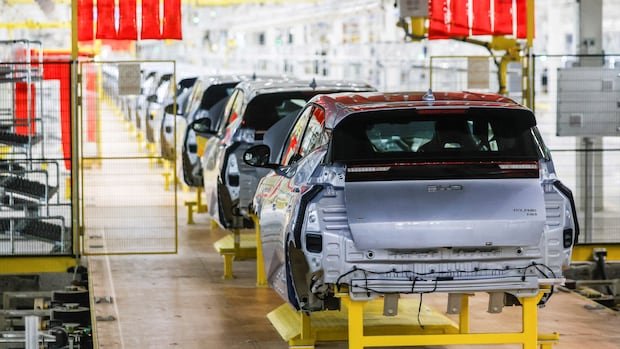
The Canadian market officially welcomed Chinese-made electric vehicles on March 1. However, popular brands like Polestar, Volvo, and Tesla are expected to enter Canada before BYD or Chery EVs. According to Peter Frise, a professor at the University of Windsor, existing Canadian-imported brands will introduce Chinese EVs first.
Chinese electric vehicles, including BYD, Chery, and Geely, are known for their competitive pricing due to cost-effective materials, labor, and government subsidies. Despite this, non-Chinese manufacturers like Volvo, Polestar, and Tesla, which also produce in China, could benefit from Prime Minister Mark Carney’s EV deal.
While China produced 12.4 million EVs in 2024 and aims for global sales of 40 million vehicles, Chinese companies face overcapacity and seek export opportunities. With a limit of 49,000 Chinese-made EVs entering Canada annually at a 6.1% tariff, manufacturers will strategically select models for export based on profitability.
Addisu Lashitew, an associate professor at McMaster University, suggested that Teslas, Polestars, and Volvos may arrive soon, while Chinese brands may experience longer permitting processes. To avoid delays in market access, Canada may expedite procedures. The importation of 24,500 EVs from March to August is anticipated, with established models from Tesla, Volvo, and Polestar leading the initial imports.
The approval process for Chinese-made vehicles involves compliance with Canadian safety standards, registration in Transport Canada’s Appendix G Pre-clearance Program, and inspections of vehicle components. While BYD has clearance for previous taxi and bus sales, other Chinese manufacturers’ approval statuses remain unclear.
Transport Canada and Global Affairs were contacted for approval timeline details, but responses were pending. Chinese manufacturers, including Chery and Xiaomi, did not provide application status updates. Polestar mentioned evaluating ongoing developments, while Tesla did not respond to inquiries.

