
The presence of U.S. military forces near Venezuela and recent attacks on suspected drug-trafficking vessels in waters off the coast have sparked concerns about potential intervention or a coup in the South American nation.
The Trump administration has been vocal about its desire to see Venezuelan President Nicolás Maduro removed from power. President Trump has labeled Maduro as a drug lord and accused Venezuela of releasing prisoners into the U.S. and trafficking drugs.
There have been speculations that the U.S. might attempt a coup or initiate a military invasion to oust Maduro. However, experts suggest that such actions are unlikely due to anticipated resistance to any military intervention by the Trump administration.
William LeoGrande, a government professor at American University, pointed out that while the U.S. has intervened in Latin American countries previously, it has never invaded a nation south of Panama. Venezuela’s size and potential military resistance make a direct invasion less feasible.
Recent military operations by the U.S. in the region, including the destruction of multiple vessels and the approval of covert CIA operations, have heightened tensions. The U.S. has also offered a substantial reward for information leading to Maduro’s arrest on drug charges.
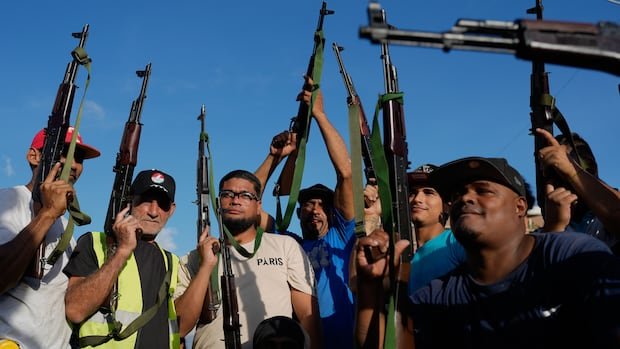
Despite the military buildup and aggressive rhetoric, experts caution that a full-scale invasion of Venezuela faces significant challenges, including the country’s substantial weapons stockpile and various armed groups within Venezuela and neighboring Colombia.
The risk of a chaotic outcome similar to Libya’s post-Gadhafi era looms large, with concerns about potential armed conflicts and power struggles in the aftermath of any forced regime change. The Venezuelan militia, bolstered by Maduro, poses a formidable challenge to external intervention.
While the U.S. administration has shown willingness to escalate tensions, the prospect of a successful regime change remains uncertain. Past covert operations in Latin America have faced obstacles, particularly in garnering military support against entrenched regimes like Maduro’s.
Maduro’s adept handling of military loyalty and internal dissent has complicated efforts to unseat him. Instead of a direct invasion, Trump may opt for continued displays of force to showcase toughness on drugs, potentially avoiding a riskier military intervention.
Internal divisions within the U.S. administration, notably between proponents of regime change and those advocating diplomatic solutions, further complicate the decision-making process regarding Venezuela. The prevailing approach leans towards a more aggressive stance, although the potential for a negotiated resolution remains uncertain.

