
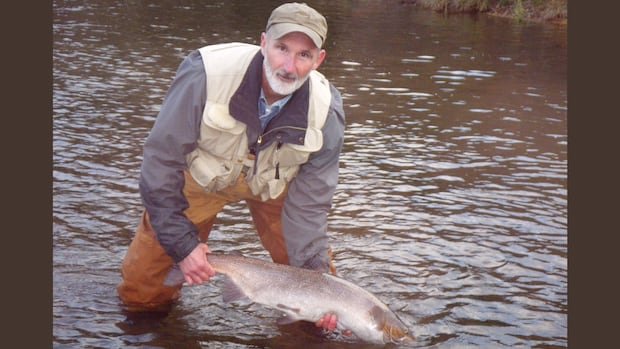
A federal advisory committee has broadened its list of imperiled Atlantic salmon populations, sparking concern among environmental groups in Cape Breton. They are apprehensive that this alteration could result in the cessation of recreational fishing for one of the East Coast’s emblematic species across most of New Brunswick, Prince Edward Island, and Nova Scotia. The Department of Fisheries and Oceans acknowledges this as a plausible outcome but not a definite one.
The adjustment in evaluation status was disclosed during federal fisheries discussions with stakeholders earlier this month, subsequent to the Committee on the Status of Endangered Wildlife in Canada (COSEWIC) reevaluating salmon populations, encompassing those along the entire coast of Nova Scotia and throughout the southern Gulf of St. Lawrence. Rene Aucoin, president of the Cheticamp River Salmon Association, attended one of these meetings and expressed dismay at the unexpected revelation.
Aucoin highlighted that while salmon populations on Nova Scotia’s Atlantic coast are facing challenges, the situation is distinct on the western side of Cape Breton Island. He emphasized the significant improvement in river health over the past decade and questioned the rationale behind designating them as endangered despite recent positive trends.
Bill Hailey, vice-president of the Margaree Salmon Association, echoed Aucoin’s sentiments, emphasizing that the Margaree River’s salmon population is thriving compared to other rivers experiencing decline, like the Miramichi River in New Brunswick. The possibility of the Nova Scotia and southern Gulf salmon populations being added to the Species at Risk Act is a major concern for both Hailey and Aucoin, as it could potentially lead to the cessation of recreational angling activities.
While the process for a potential endangered listing under federal law is lengthy and intricate, with involvement from various stakeholders, including the public and conservation organizations, uncertainties loom over the future of salmon conservation efforts. Despite the ongoing Atlantic salmon conservation strategy initiated by the DFO, criticisms persist regarding the adequacy of funding for these initiatives. The decision-making process will consider a wide array of factors, encompassing scientific advice, socio-economic impacts, and Indigenous perspectives before any definitive actions are taken.

