
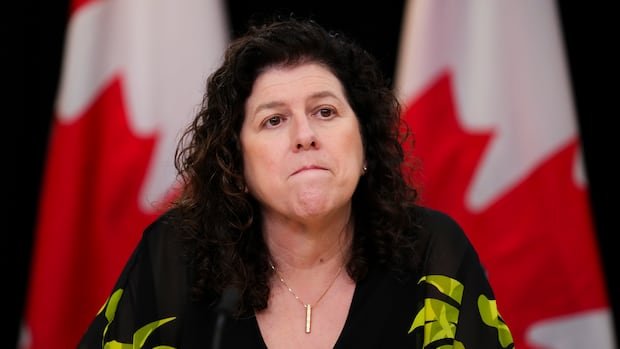
In a critical new report made public on Tuesday, the auditor general revealed that Canada Revenue Agency (CRA) contact centres are consistently falling short in answering calls promptly, and when connections are made, agents often provide inaccurate information.
Despite the CRA committing to answering 65% of calls within 15 minutes, Auditor General Karen Hogan discovered that only 18% were responded to within that timeframe in the 2024-25 period. The situation deteriorated in June, with fewer than 5% of calls being answered within 15 minutes.
The AG’s office conducted 167 test calls to the CRA between February and May this year to evaluate the agency’s response time commitment. The average wait time to reach an agent was almost 33 minutes, with analysts spending around 50 minutes on average from hold time to receiving an answer.
This aligns with the CRA’s own data, indicating an average of 31 minutes to reach an agent annually for tens of millions of callers, double the time compared to the previous year, signaling declining standards and deteriorating service quality.
Moreover, CRA call centres redirected approximately 8.6 million calls last year, denying many customers the chance to speak with an agent, a significant increase from the 1.4 million calls redirected the previous year.
Consequently, complaints from customers regarding the CRA spiked by 145% between 2021-22 and 2024-25, despite the agency reporting that 77% of survey respondents were “satisfied” with their experience.
The AG recommended that the CRA develop a more efficient system to prioritize calls related to issues with the MyAccount online portal, as numerous calls involve being locked out of the digital system, tying up agents unnecessarily.
The most concerning finding by the auditor general was that taxpayers frequently receive inaccurate information from CRA agents. The assessment of test calls revealed that only 17% of responses to general tax questions were accurate, accounting for one-fifth of all calls. Accuracy rates for benefit and business tax inquiries were slightly better but still unsatisfactory at 56% and 54%, respectively.
Furthermore, the CRA’s chatbot, Charlie, provided accurate responses only 33% of the time, indicating a lack of improvement in accuracy. The report highlighted that the CRA dedicated minimal resources to enhancing accuracy, with just 2,200 hours of coaching, feedback, or training in 2024-25, averaging under 30 minutes per agent annually.
The auditor general also uncovered that the CRA is not maximizing its contract with IBM for telephony services, as real-time updates on queue positions were not provided during test calls, leaving callers uninformed about wait times.
Liberal MP Wayne Long, the CRA’s secretary of state, mentioned the initiation of a 100-day service improvement plan in September, focusing on increasing call response rates. Although the CRA has recruited more staff and seen improvements in call connections since implementing the plan, the primary goal remains answering calls rather than meeting specific timeframes.
Long emphasized the need for the CRA to strive for better results, hold leadership accountable, and address the issues raised in the report to enhance service quality.
In addition to the CRA’s inefficiencies, the auditor general also released audits on military recruitment, early learning and child-care systems, cyber security, and various First Nations programs, highlighting critical findings and areas requiring improvement in each sector.

