
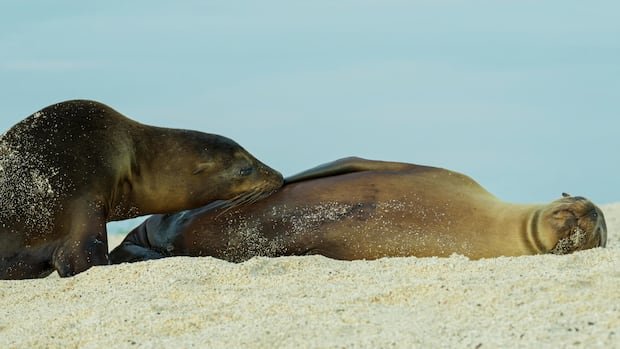
A researcher named Alexandra Childs was surprised by the behavior of fully grown Galápagos Islands sea lions continuing to nurse from their mothers. Childs, a PhD candidate in behavioral and marine biology at the University of Bielefeld in Germany, expressed astonishment at this phenomenon, which she referred to as “supersuckling.”
Childs led a study that revealed approximately 11% of the sea lion population in the Galápagos engages in this prolonged nursing behavior. This behavior is akin to humans breastfeeding into their teenage and young adult years, a puzzling aspect that researchers are still trying to comprehend.
The study analyzed two decades of data on Galápagos sea lions, scientifically known as Zalophus wollebaeki. Most sea lions typically wean off their mothers between 1.5 and 4.5 years of age, just before reaching sexual maturity. However, the “supersucklers” continue nursing well beyond this age range, defying expectations.
Notably, the research observed instances of “multigenerational suckling trains,” where multiple generations of sea lions engage in this behavior. While similar behaviors have been observed in other sea lion species and seals, the prevalence in the Galápagos sea lions stands out.
Experts, like Andrew Trites from the University of British Columbia, suggest that supersuckling may be linked to food availability and the mother’s desire to ensure the survival and reproductive success of their offspring. However, the study notes that this behavior was more frequent during periods of abundant food resources rather than scarcity.
While some speculate that supersuckling could be a bonding or social behavior, the exact reasons behind this phenomenon remain unclear. Further research is needed to unravel the mysteries surrounding the prolonged nursing behavior observed in the Galápagos sea lions.

