
Wild market fluctuations that occurred overnight settled down as the trading day began on Wall Street on Monday. U.S. stocks remained relatively stable after positive movements in European markets and significant declines in Asian markets. Additionally, gold and silver prices rebounded after experiencing significant losses earlier.
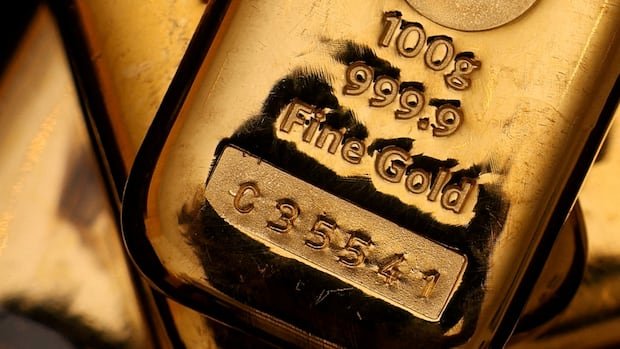
The focus in financial markets was once again on precious metals, particularly gold, which had seen a sharp increase in value over the past year. Gold prices briefly fell below $4,500 per ounce overnight, marking a drop of over $1,000 from its recent peak. However, it later recovered some of these losses and settled at $4,725.00, representing a 0.5% decrease from Friday’s levels.
Silver prices have also been experiencing volatility, swinging from a nine percent loss to a three percent gain within a short period. The surge in gold and silver prices was driven by investors seeking safe-haven assets amidst various concerns, including potential changes in the Federal Reserve’s independence, high stock market valuations, trade tensions, and global debt levels.
The recent drop in prices, including a significant decline in silver, was attributed to President Donald Trump’s nomination of Kevin Warsh as the next Federal Reserve chair. Some analysts speculated that Warsh’s appointment could lead to higher interest rates, reducing the appeal of gold and silver as protective assets.
However, there are differing opinions on the potential impact of Warsh’s appointment, with some suggesting that he may actually lower interest rates in line with the president’s demands. The Federal Reserve chair plays a crucial role in influencing economic conditions and global markets by guiding interest rate policies to balance employment and inflation.
The recent fluctuations in gold and silver prices are likely a result of traders unwinding leveraged positions rather than a fundamental shift in demand for these metals. Market experts emphasize that the movements are driven by short-term trading dynamics rather than long-term market fundamentals.
As trading opened, the S&P 500 dipped slightly, heading for its fourth consecutive loss, while the Dow Jones Industrial Average rose by 0.2%. On the other hand, the Nasdaq composite declined by 0.3%, with technology stocks, including Nvidia, weighing on the market. In Asia, AI-related stocks faced significant losses, with South Korea’s Kospi index experiencing its largest single-day decline in almost 10 months due to a drop in chipmaker SK Hynix’s stock.

