
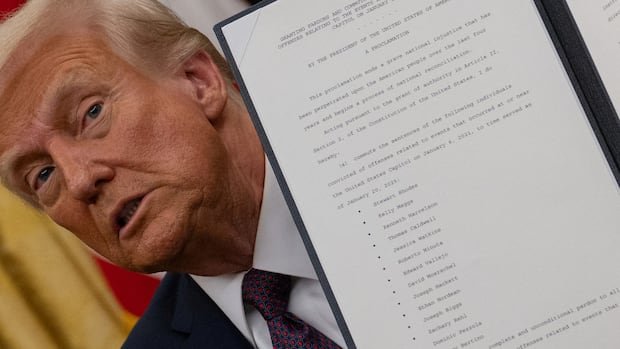
A collective of numerous officials from various branches of the U.S. government, such as intelligence personnel, has been actively involved in guiding President Donald Trump’s campaign for retaliation against individuals he perceives as adversaries, as per government documents and a knowledgeable source.
The Interagency Weaponization Working Group, established at least since May, has brought together representatives from the White House, the Office of the Director of National Intelligence, the CIA, and the Justice and Defense departments, as well as the FBI, the Department of Homeland Security, the IRS, and the Federal Communications Commission, among other agencies, according to two official documents.
President Trump issued an executive order on his first day in office, directing the attorney general to collaborate with other federal bodies to uncover and address past wrongdoings by the federal government concerning the misuse of law enforcement and intelligence resources. Attorney General Pam Bondi and Director of National Intelligence Tulsi Gabbard had previously announced internal groups within their departments to identify and root out those who allegedly abused governmental authority against Trump.
Following inquiries from Reuters, Fox News reported the group’s existence, with Gabbard claiming responsibility for establishing the working group. Multiple U.S. officials confirmed the presence of the Interagency Weaponization Working Group in response to Reuters, stating that its objective is to execute Trump’s executive order.
An anonymous White House official dismissed the reports as nothing new, emphasizing the administration’s commitment to promoting transparency, depoliticizing, and preventing the misuse of power against the public.
The group’s formation highlights the administration’s extensive and systematic efforts to utilize governmental authority against Trump’s perceived adversaries, a concept the president and his allies refer to as “weaponization.” This term is used to describe their unsubstantiated allegations that officials from past administrations abused federal resources to target Trump during various legal proceedings and investigations.
The mission of the interagency group, according to a source, primarily revolves around targeting individuals associated with the so-called “Deep State,” a label used by Trump and his supporters to describe opponents from previous administrations and his first term in office.
The extent to which the interagency group has taken concrete actions or the level of Trump’s direct involvement in the group remains unclear. Discussions within the group reportedly included figures like former FBI Director James Comey, Dr. Anthony Fauci, and former military leaders who imposed COVID-19 vaccination mandates.
While the source mentioned discussions involving potential targets beyond government employees, including Joe Biden’s son Hunter, a senior ODNI official denied any deliberate targeting for retribution, emphasizing that the group focuses on investigating possible illegal weaponization of the government for political purposes.
Efforts to reach representatives for James Comey, Hunter Biden, and Anthony Fauci for comments were unsuccessful. Reviewing over 20 government records revealed the identities of 39 individuals linked to the interagency group, including discussions related to events like the January 6 Capitol riot and potential actions against specific individuals.
The group’s activities and level of authority to influence government actions or provide recommendations remain unclear. Additionally, the focus on retribution for the Jan. 6 incident and reviews of related prosecutions were mentioned as key areas of interest for the group, as well as discussions on various contentious topics like Jeffrey Epstein, Steve Bannon, and Peter Navarro.
The involvement of vocal supporters of Trump’s election fraud claims among the group’s members was noted in official documents, with the participation of CIA officers also highlighted, although their specific roles were not disclosed. Several federal agencies associated with the working group did not provide comments upon request, except for the Department of Homeland Security, which expressed a commitment to rectifying past actions by the previous administration.

