
Prime Minister Benjamin Netanyahu emphasized on Sunday that Israel would have the final say on the involvement of foreign forces in a proposed international force in Gaza, aimed at maintaining a delicate ceasefire as outlined in U.S. President Donald Trump’s initiative. The potential participation of Arab and other nations in providing troops remains uncertain, largely due to the reluctance of Palestinian Hamas militants to disarm as mandated by the plan, coupled with Israel’s apprehensions regarding the composition of the force.
While the U.S. has ruled out deploying its own troops to Gaza, it has engaged in discussions with countries like Indonesia, the United Arab Emirates, Egypt, Qatar, Turkey, and Azerbaijan to potentially contribute to the multinational force. Netanyahu asserted Israel’s stance, stating, “We are in control of our security, and we have also made it clear regarding international forces that Israel will determine which forces are unacceptable to us, and this is how we operate and will continue to operate,” during a cabinet meeting. He highlighted that the United States supports this position, as expressed by its senior officials recently.
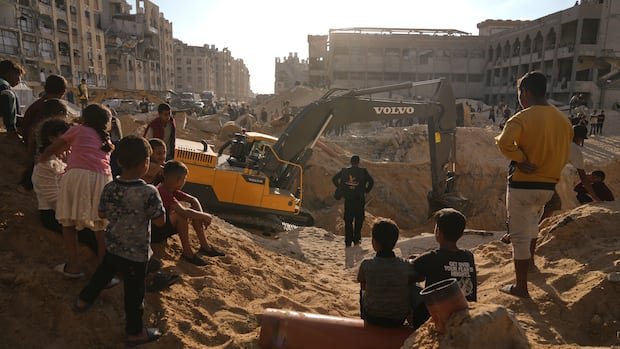
In a separate development, Hamas has widened its search for the remains of hostages in Gaza, following Egypt’s deployment of a team equipped with heavy machinery to assist in the recovery efforts. As part of the ceasefire brokered by the U.S., Hamas is expected to promptly return the bodies of all Israeli hostages, with Israel reciprocating by returning bodies of Palestinians. The search for hostages’ bodies has witnessed significant community interest, with onlookers observing the excavation process in Khan Younis.
The ceasefire plan entails complex steps ahead, including Hamas’s disarmament and the post-conflict governance of Gaza, a region grappling with severe humanitarian challenges. Despite calls from the United Nations and aid partners for increased humanitarian access, Israel has maintained strict control over entry into Gaza. Hamas has indicated continued efforts to locate the remaining hostages’ bodies, with Khalil al-Hayya, Hamas’s Gaza leader, confirming the group’s ongoing search operations.
In response to Israeli strikes on the Nuseirat refugee camp in Gaza, Netanyahu defended the military’s actions, citing preemptive measures to counter potential threats. However, Hamas condemned the strikes as a breach of the ceasefire agreement and accused Netanyahu of undermining U.S. mediation efforts to end the conflict. Netanyahu reiterated Israel’s commitment to its security and dismissed rumors suggesting external influence on Israel’s security decisions in Gaza.
The recent escalation in hostilities has raised concerns over the stability of the ceasefire, with past incidents resulting in significant casualties on both sides. The conflict has taken a heavy toll on the civilian population, with Gaza’s Health Ministry reporting a high number of Palestinian casualties during the prolonged conflict, while Israel disputes the figures without presenting alternative statistics.

