
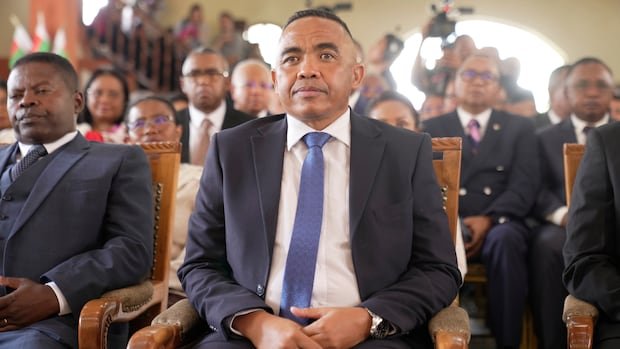
Madagascar witnessed a rapid transfer of power as an army colonel orchestrated a military coup, leading to the ousting of the president, who fled the country to seek refuge. Colonel Michael Randrianirina, the head of an elite army unit, was swiftly sworn in as the new leader during a ceremony at the nation’s High Constitutional Court in the presence of nine judges.
The military takeover, following weeks of protests primarily led by young people, resulted in Madagascar’s suspension from the African Union. President Andry Rajoelina, fearing for his safety, left the country and was impeached in absentia by parliament before the colonel’s formal assumption of power.
Randrianirina, aged around 50 or 51, transitioned from military attire to a formal suit for the inauguration ceremony, attended by military officials, civilian dignitaries, and foreign diplomats. His sudden rise to power came after a period of relative obscurity, with a past stint in detention for an attempted mutiny.
The political landscape in Madagascar has been marred by poverty and instability since gaining independence in 1960. Randrianirina has outlined plans for a military council to govern for up to two years before new elections, prolonging the wait for young activists who spearheaded the uprising against Rajoelina.
Despite the upheaval, there has been minimal violence post-takeover, with Madagascans showing support for Randrianirina’s troops. The colonel stated that the military intervention aimed to address societal issues and restore national security. International bodies like the United Nations and the African Union have criticized the unconstitutional change in government, advocating for a return to constitutional order.
The protests in Madagascar, reminiscent of youth-led movements in other countries, initially focused on issues like essential service disruptions and escalated to broader grievances against the government. Randrianirina’s pledge to tackle insecurity and social challenges reflects his vision for the country’s future.

