
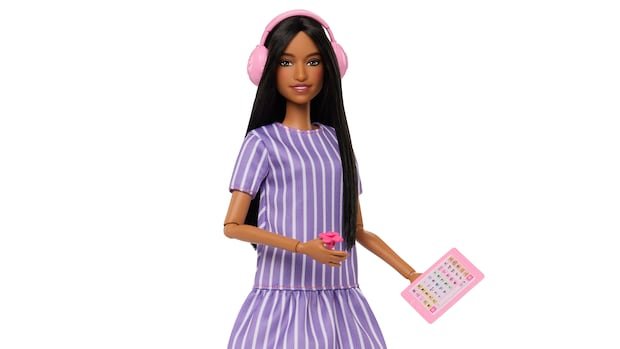
In a bid to promote inclusivity in their Barbie line, toy maker Mattel Inc. has unveiled their inaugural autistic Barbie doll. Developed in collaboration with the Autistic Self Advocacy Network (ASAN), the doll aims to provide representation for autistic children and educate non-autistic individuals.
Noor Pervez, the community engagement manager at ASAN, highlighted the importance of showcasing autistic individuals as normal and integral members of society. The doll’s unique features were carefully chosen with input from advocates during an 18-month development period. For instance, the doll’s eyes are designed to subtly shift to the side to reflect the tendency of some autistic individuals to avoid direct eye contact.
Additionally, the Barbie features movable elbows and wrists to acknowledge behaviors like stimming and hand flapping commonly seen in autistic individuals. The doll also comes with a fidget spinner to cater to sensory needs. The development team deliberated on outfit choices, ultimately opting for a loose-fitting garment to cater to sensitivities some autistic individuals have towards fabric textures.
The doll is equipped with a tablet to represent non-speaking autistic individuals, and it embodies both autistic women and people of color to address the underrepresentation of these groups in autism identification. Deepa Singal from the Autism Alliance of Canada emphasized the importance of broader representation in helping address the under-diagnosis of girls with autism.
The introduction of the autistic Barbie aligns with a broader trend in children’s entertainment towards inclusivity. Mattel’s Fashionistas line, which includes dolls representing various disabilities and conditions, aims to reflect diverse realities and inspire imagination. Jamie Cygielman, Mattel’s global head of dolls, expressed pride in the company’s commitment to diversity and inclusion through the Barbie brand.
For Pervez, who drew inspiration from his childhood experiences with inclusive dolls, the autistic Barbie serves as a tool for fostering empathy and understanding among children. The doll’s representation is seen as a significant step towards creating a more inclusive and accepting world for autistic individuals.
This move by Mattel underscores a commitment to diversity and representation in children’s toys, setting a positive example for the industry. The message conveyed by the autistic Barbie is clear: everyone belongs and should be celebrated for their unique qualities and identities.

