
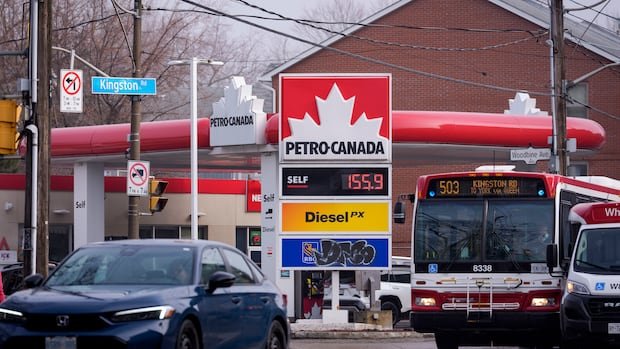
Over the past week, Canadians have witnessed a surge in fuel prices nationwide due to escalating tensions in the Middle East, leading to a spike in oil prices. As of Friday, the average retail price of fuel in Canada has risen to 150 cents per litre, marking an increase of nearly 20 cents from the previous week’s 133.4 cents per litre, as reported by data from GasBuddy.com. British Columbia currently experiences the highest prices at 168.6 cents per litre.
The recent surge in prices follows the conflict between Israel and the United States against Iran, resulting in retaliatory strikes by Iran on Israel and U.S. bases. This has led to casualties, evacuations, and a growing humanitarian crisis. Furthermore, the conflict has disrupted oil tanker traffic in the vital Strait of Hormuz, a key passageway where a significant portion of the world’s oil is transported.
In the United States, benchmark crude oil prices soared to a two-year peak on Friday, with oil prices exceeding $90 US per barrel for the first time since October 2023, amid expectations that the conflict will extend into its second week.
Despite the tensions, Gasbuddy petroleum analyst Matt McClain reassured that there are no significant fuel supply disruptions expected in Canada or the United States, as both countries produce substantial amounts of oil internally. However, McClain cautioned that consumers could face rising fuel prices, potentially leading to financial strain depending on the duration and impact of the conflict.
Individuals refueling their vehicles shared their concerns about the escalating prices. Amy Gooding, a resident of the Greater Toronto Area, expressed the dilemma of needing gas regardless of the cost, impacting other budgetary allocations. Bailey Jones in Saint John, N.B., echoed similar sentiments, acknowledging the inevitability of rising prices and the necessity of fuel for daily activities.
Experts anticipate that the heightened fuel prices may persist for an extended period, even if the conflict resolves swiftly, as suggested by U.S. President Donald Trump. Warren Mabee, director of the Institute for Energy and Environmental Policy at Queen’s University, highlighted that price disruptions often endure post-conflicts, hinting at potential months of fluctuating prices. The extent of the price surge remains uncertain, emphasizing the need for continued monitoring of the situation.
In an interview with CBC’s Afternoon Drive, Mabee predicted that while the current situation may not mirror the drastic price surges of the 1970s oil crises, a moderate increase of around five to 10 percent above pre-conflict levels could be expected in gas prices.

