
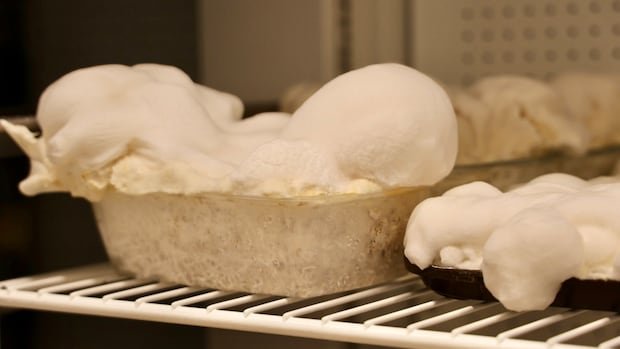
Deep in a dimly lit growing chamber in the depths of a research facility at Acadia University, a unique white substance emerges from an industrial tray. Resembling meringue, snow, or spray-foam insulation, this peculiar living organism is mycelium – the underground network of a mushroom.
At Acadia, researchers have collaborated with an entrepreneur to refine a process that aims to utilize mycelium for producing a high-protein powder for the commercial food industry. The brainchild behind this initiative is Katie McNeill, who initially conceived the idea based on the abundant agricultural food waste in the Valley.
Partnering with Allison Walker, a biologist at Acadia, McNeill embarked on experiments to cultivate mycelium on a specific undisclosed food waste sourced from a Valley facility. Through meticulous trials involving different mushroom species, temperature variations, and humidity adjustments, they optimized the growing conditions.
The process involves creating a mycelium-infused liquid broth mixed with food waste, allowing the mycelium to flourish before transferring it to trays for further development. Unlike traditional mushroom growth patterns in soil, the team promotes upward growth to enhance production efficiency.
The mycelium produced by Walker and McNeill boasts an impressive protein content of around 40%, surpassing typical mushroom protein levels. Positioned as a sustainable protein source, Mycaro’s product distinguishes itself from competitors by minimizing processing and emphasizing a more natural approach.
With a focus on sustainable energy utilization and indoor vertical farming techniques, Mycaro aims to offer a protein product that appeals to a broader consumer base. The neutral taste profile of their mycelium product caters to individuals seeking alternative protein options without compromising flavor or nutritional benefits.
Looking ahead, McNeill and Walker plan to scale up production, conduct consumer testing, and establish a small commercial facility by the end of 2026. The project’s success hinges on meticulous care for the temperamental mycelium growth process, emphasizing food safety and quality assurance protocols.
Funded primarily by Invest Nova Scotia to date, McNeill anticipates seeking additional investments in the near future to propel Mycaro’s growth. The journey from conceptualization to tangible progress underscores the team’s commitment to innovation and sustainability in the food industry.

